
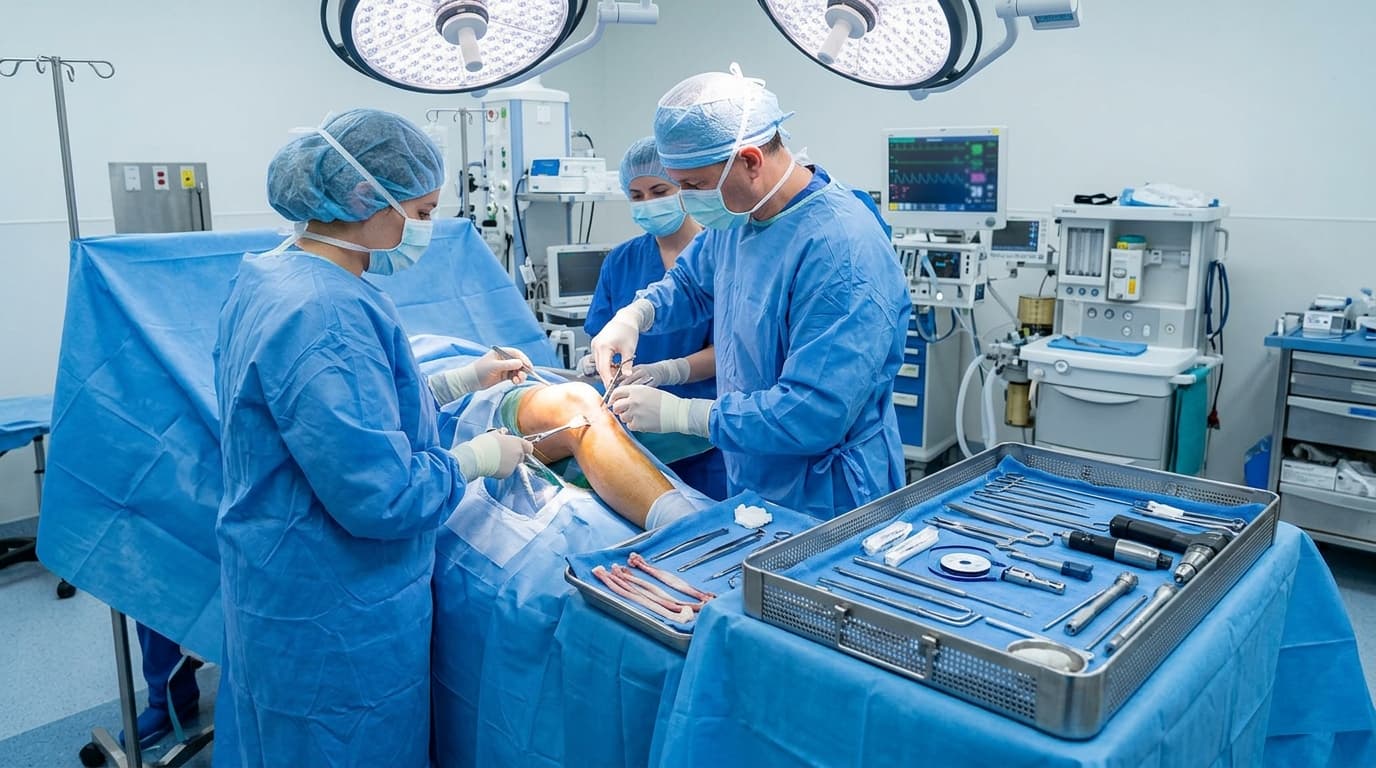

Understanding Multi-Ligament & Multi-Bone Trauma Reconstruction
High-speed road traffic accidents, industrial crush injuries, and falls from heights often cause severe polytrauma involving multiple broken bones (femur, tibia, pelvis, upper extremities) and multi-ligament knee disruptions (knee dislocations involving ACL, PCL, MCL, and LCL/PLC). These complex injuries require sophisticated Damage Control Orthopaedics (DCO)—rapid emergency stabilization, meticulous neurovascular monitoring, and staged anatomical reconstruction to restore skeletal stability and joint function.
AIIMS Apex Trauma & AO Reconstruction Rigor
Complex articular fractures require anatomical joint surface restoration and stable biological fixation according to international AO principles to prevent post-traumatic arthritis and enable prompt joint mobilization.
When Should You Consider Consultation for Multi-Ligament Trauma?
Specialist intervention is considered when joint pain or functional limitation significantly disrupts your daily life and conservative measures have been exhausted. Check if you experience any of the following:
High-energy vehicular accident or industrial trauma with multiple broken bones across multiple limbs.
Knee dislocation or severe gross instability where the knee bends unnaturally in multiple directions.
Polytrauma patient requiring coordinated tertiary surgical care following initial emergency stabilization.
Complex open fractures with soft-tissue loss requiring multidisciplinary reconstructive management.
Secondary referral for staged definitive fixation of multi-bone injuries.

Dr. Vijay Kumar
Verified SpecialistSenior Consultant Orthopaedic, Robotic Joint Replacement & Complex Articular Trauma Surgeon
“My surgical philosophy centers on biological preservation, anatomical restoration, and rapid functional recovery. By tailoring the intervention to each patient's unique anatomy and lifestyle, we achieve lasting pain relief and active mobility.”
The 4-Stage Precision Clinical Workflow
3D CT Evaluation & Surgical Planning
Emergency tertiary trauma evaluation including CT angiogram assessing popliteal and extremity vessels.
Direct Anatomical Articular Reduction
Initial stabilization with temporary bridging external fixators to allow soft tissue swelling to subside.
Rigid Internal Fixation (AO Protocol)
High-definition 3D CT and MRI mapping of all bony fragments and torn ligament complexes.
Supervised Early Mobilization & Healing
Definitive minimally invasive internal fixation of fractures using titanium locking plates and nails.
Stage 05: Reconstruction Stage
Anatomical arthroscopic and open multi-ligament reconstruction restoring joint stability.
Treatment Modalities Offered
Dr. Vijay Kumar practices conservative joint-sparing protocols first, proceeding to advanced surgical intervention only when indicated:
Non-Surgical & Joint Sparing
- Emergency temporary splinting and reduction of dislocated joints
- Hemodynamic resuscitation and intensive care monitoring prior to major surgery
Specialised Surgical Procedures
- Damage Control External Fixation followed by planned definitive internal fixation
- Simultaneous / Staged Multi-Ligament Knee Reconstruction (ACL + PCL + PLC / MCL)
- Minimally invasive biological bridge plating and locked intramedullary nailing
- Microvascular soft tissue and bone reconstruction coordination
Recovery Timeline & Mobility Milestones
Weeks 1–4: Fracture consolidation initiation, neurovascular monitoring, gentle passive joint range of motion.
Weeks 6–12: Progressive partial weight-bearing as fractures consolidate, active range of motion.
Months 4–6: Full unassisted weight-bearing, gait re-education, weaning off crutches.
Months 8–12: Resumption of independent daily life, workplace duties, and functional mobility.
International Fellowship & Surgical Suite Records
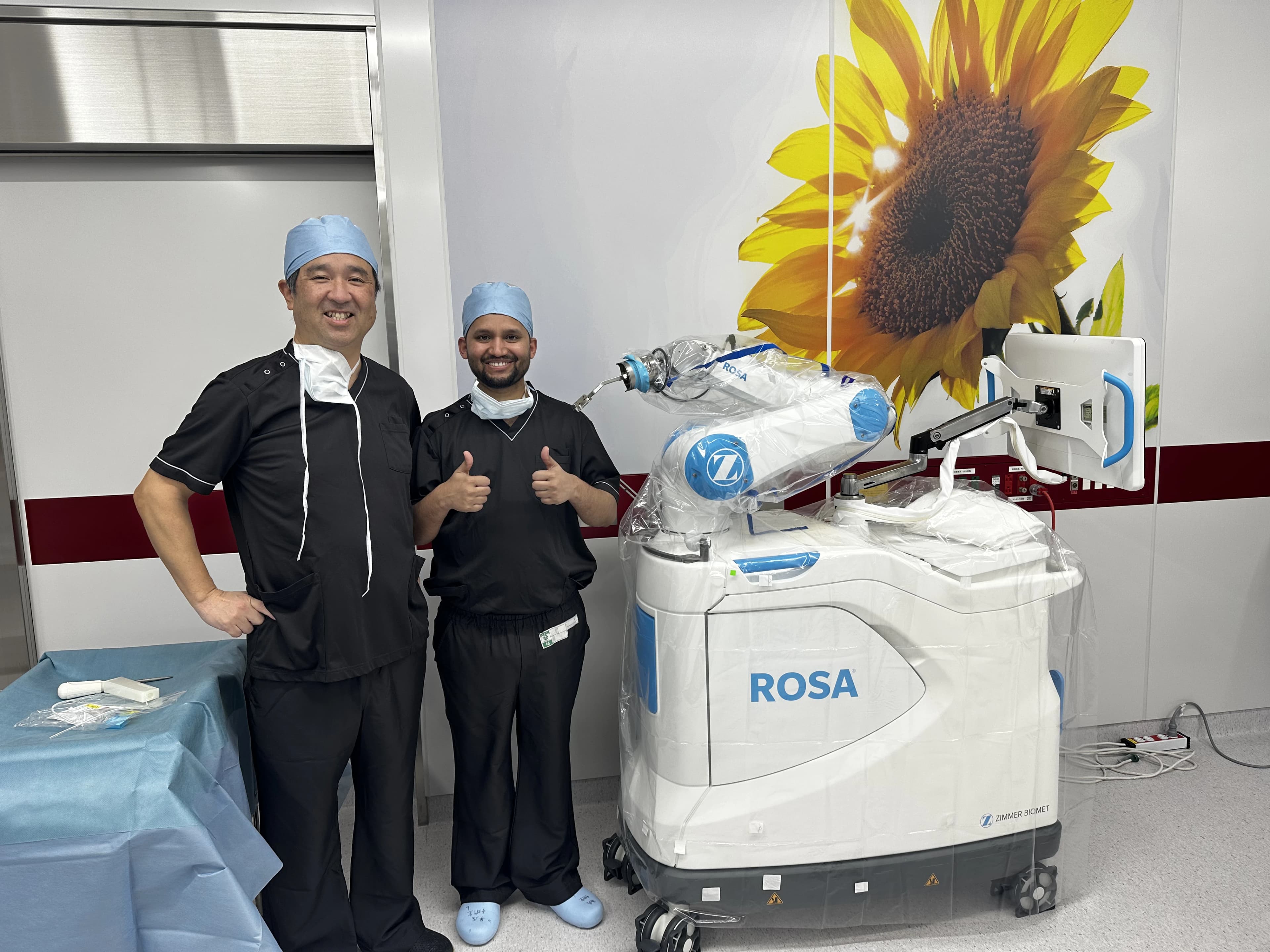
Intraoperative kinematics & 3D navigation alongside Japanese surgical faculty.
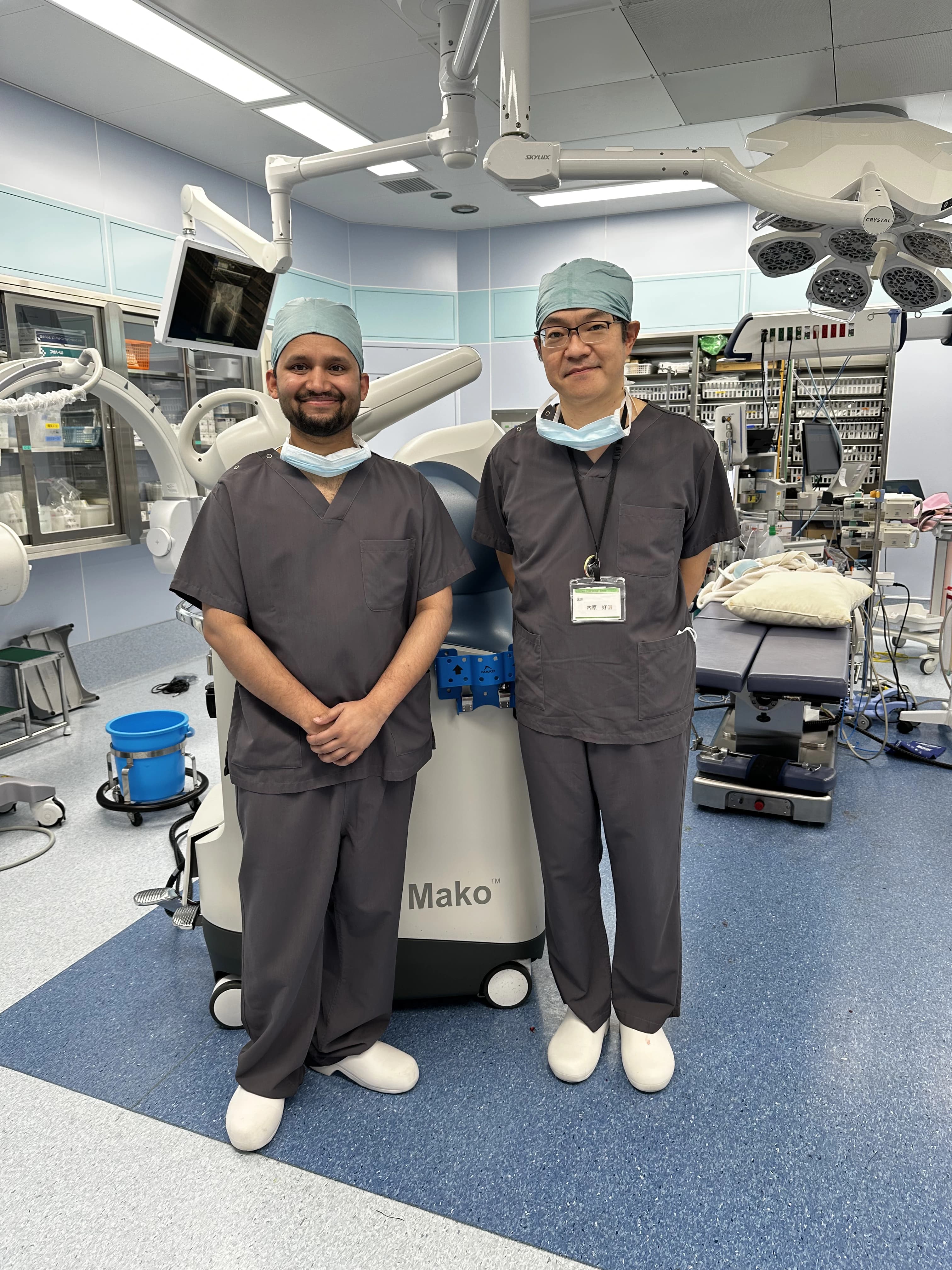
International fellowship-level precision applied to patient care in Patna.
Frequently Asked Questions on Multi-Ligament Trauma
A knee dislocation involves tearing multiple ligaments and carries a high risk of injury to the main popliteal artery behind the knee, which requires urgent evaluation and reduction to protect blood flow to the leg.