
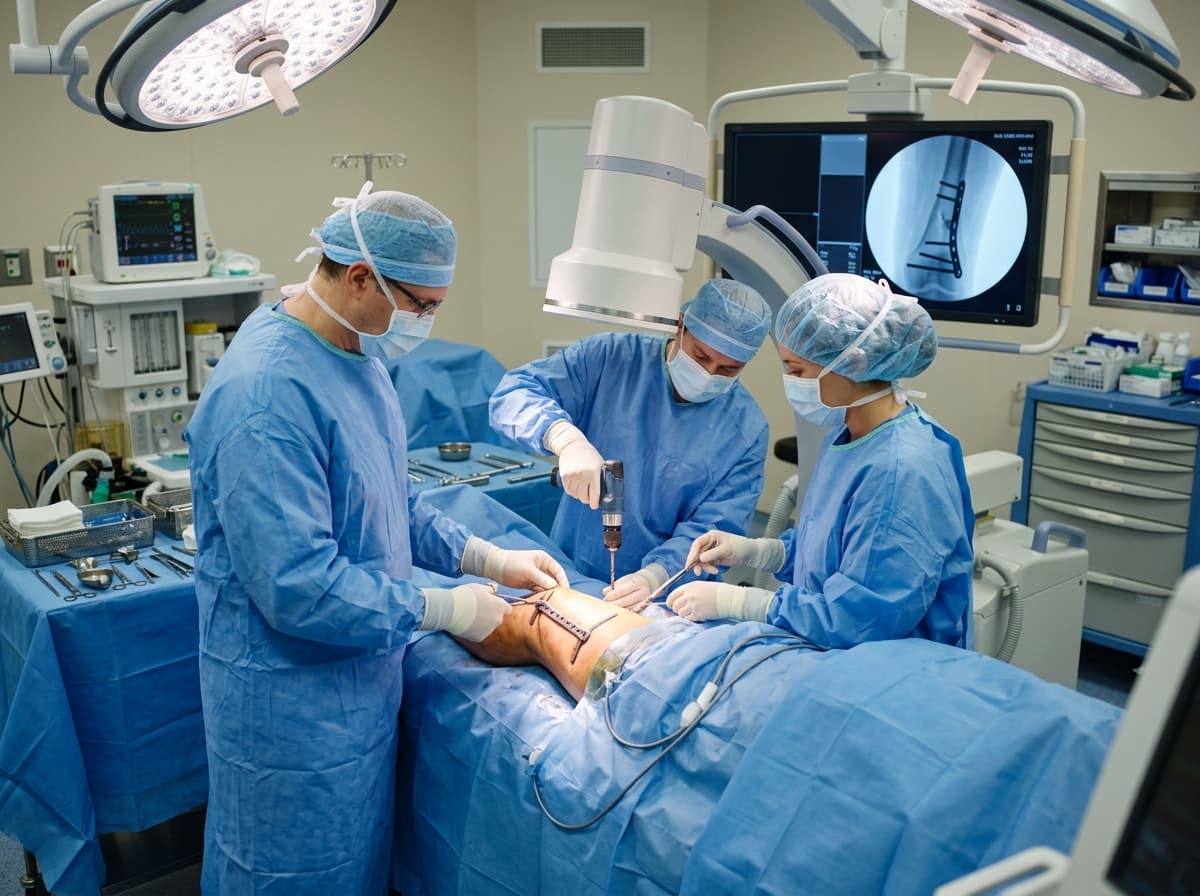

Understanding Complex Trauma & Periarticular Fracture Surgery
High-speed road traffic accidents, falls from height, and industrial trauma cause complex periarticular fractures (fractures extending directly into the knee, ankle, hip, shoulder, or elbow joints) and life-threatening pelvi-acetabular injuries. Restoring exact joint congruency and achieving stable biological fixation is essential to avoid catastrophic joint collapse, limb shortening, and post-traumatic arthritis.
AIIMS Apex Trauma & AO Reconstruction Rigor
Complex articular fractures require anatomical joint surface restoration and stable biological fixation according to international AO principles to prevent post-traumatic arthritis and enable prompt joint mobilization.
When Should You Consider Consultation for Complex Trauma & Fracture Surgery?
Specialist intervention is considered when joint pain or functional limitation significantly disrupts your daily life and conservative measures have been exhausted. Check if you experience any of the following:
Severe high-energy fracture involving the hip socket (acetabulum) or pelvic ring.
Complex fractures around the knee (tibial plateau or distal femur) or ankle (pilon fractures).
Open (compound) fractures with bone exposure or severe soft-tissue compromise.
Polytrauma patient requiring structured orthopaedic damage control resuscitation.
Complex articular fracture requiring tertiary specialist reconstruction.

Dr. Vijay Kumar
Verified SpecialistSenior Consultant Orthopaedic, Robotic Joint Replacement & Complex Articular Trauma Surgeon
“My surgical philosophy centers on biological preservation, anatomical restoration, and rapid functional recovery. By tailoring the intervention to each patient's unique anatomy and lifestyle, we achieve lasting pain relief and active mobility.”
The 4-Stage Precision Clinical Workflow
3D CT Evaluation & Surgical Planning
Multi-planar 3D CT reconstruction to map every displaced fracture fragment and articular depression.
Direct Anatomical Articular Reduction
Implementation of Orthopaedic Damage Control (temporary external spanning fixator until soft tissues wrinkle).
Rigid Internal Fixation (AO Protocol)
Anatomical reduction of the articular surface under direct high-resolution visual inspection.
Supervised Early Mobilization & Healing
Rigid internal fixation with anatomically pre-contoured locked titanium plates and screws.
Treatment Modalities Offered
Dr. Vijay Kumar practices conservative joint-sparing protocols first, proceeding to advanced surgical intervention only when indicated:
Non-Surgical & Joint Sparing
- Strict skeletal traction in hemodynamically unstable patients awaiting definitive fixation
- External fixator span-scan-plan protocol for severe soft-tissue swelling
Specialised Surgical Procedures
- Open Reduction and Internal Fixation (ORIF) of Acetabular Fractures (Anterior & Posterior columns)
- Pelvic Ring Reconstruction (Sacro-iliac percutaneous screw fixation / anterior plating)
- Articular reconstruction of Tibial Plateau fractures using locked subchondral rafts
- Minimally Invasive Plate Osteosynthesis (MIPO) preserving fracture hematoma biology
- Primary fracture arthroplasty for unfixable osteoporotic periarticular breaks
Recovery Timeline & Mobility Milestones
Weeks 1–6: Strict protected non-weight-bearing; active non-weight-bearing joint motion exercises.
Weeks 6–10: Radiographic evidence of bridging callus; initiation of partial weight-bearing.
Weeks 10–14: Transition to full weight-bearing as fracture consolidates.
Months 4–6: Extensive strengthening, proprioception retraining, and return to independent mobility.
International Fellowship & Surgical Suite Records
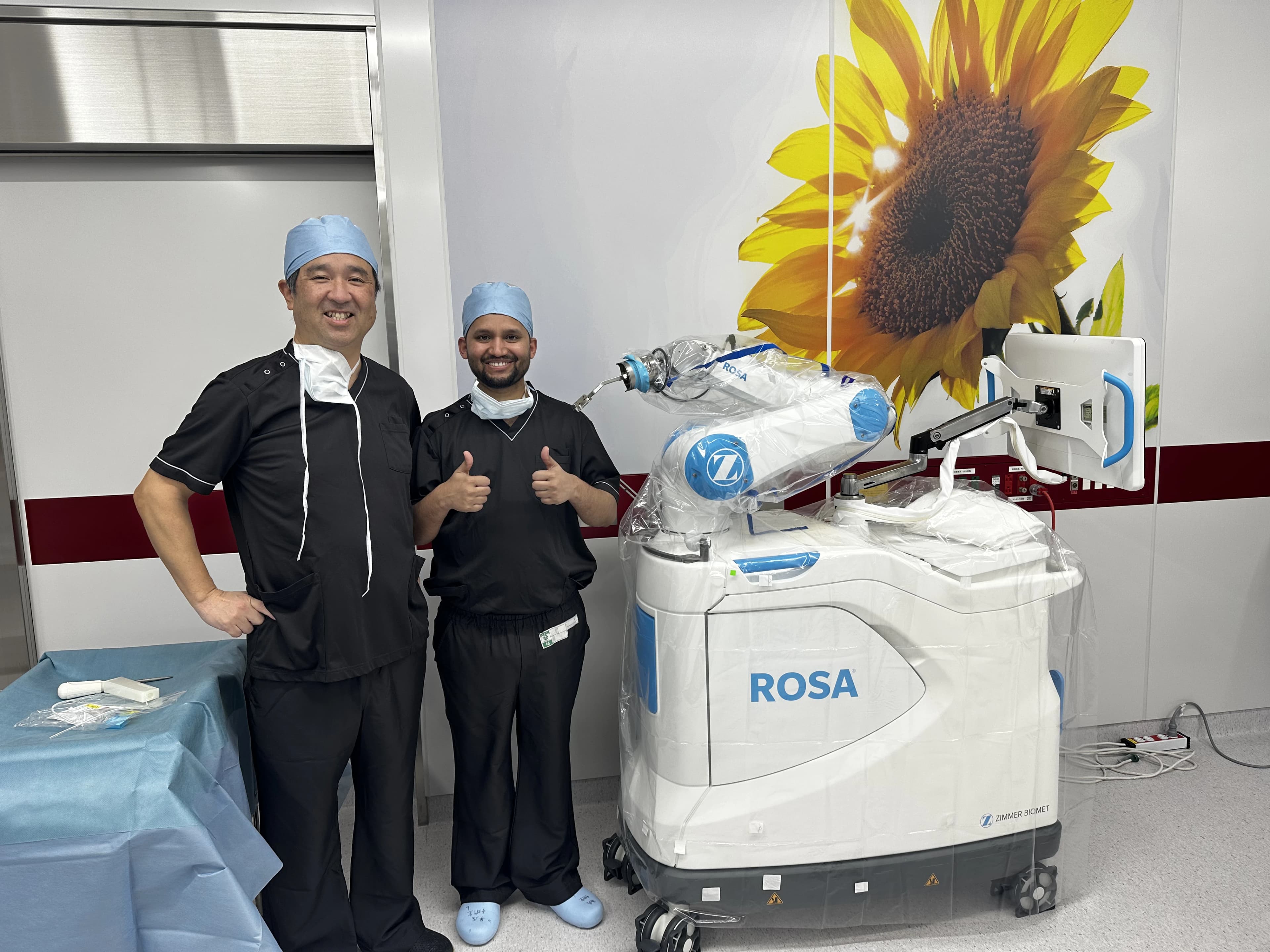
Intraoperative kinematics & 3D navigation alongside Japanese surgical faculty.
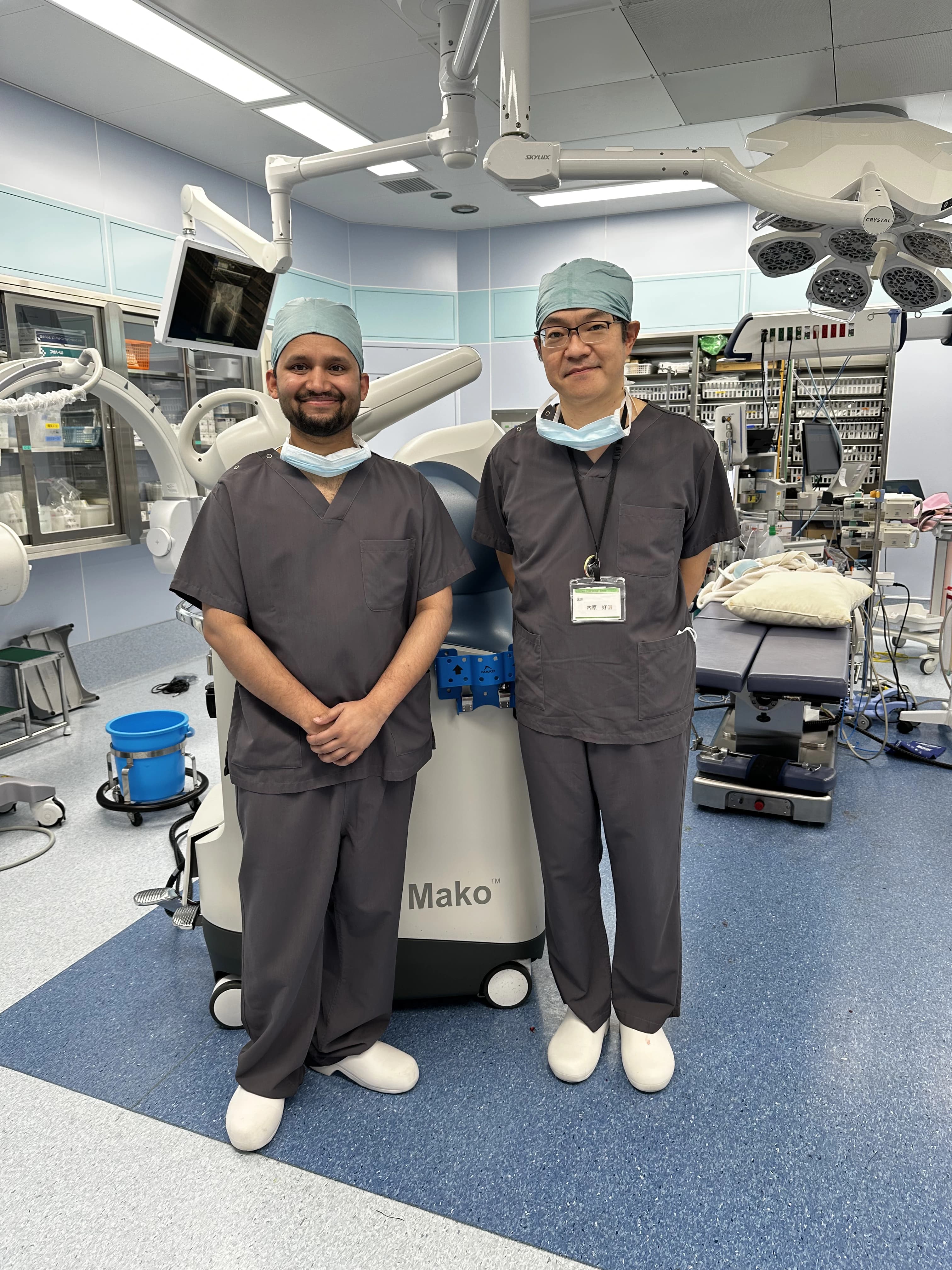
International fellowship-level precision applied to patient care in Patna.
Frequently Asked Questions on Complex Trauma & Fracture Surgery
Periarticular fractures are broken bones that occur right next to or directly involve the smooth gliding cartilage surface of a joint (such as the knee, hip, shoulder, or ankle). They require precise anatomical realignment to prevent early degenerative arthritis.