

Understanding Joint Preservation & Osteotomy
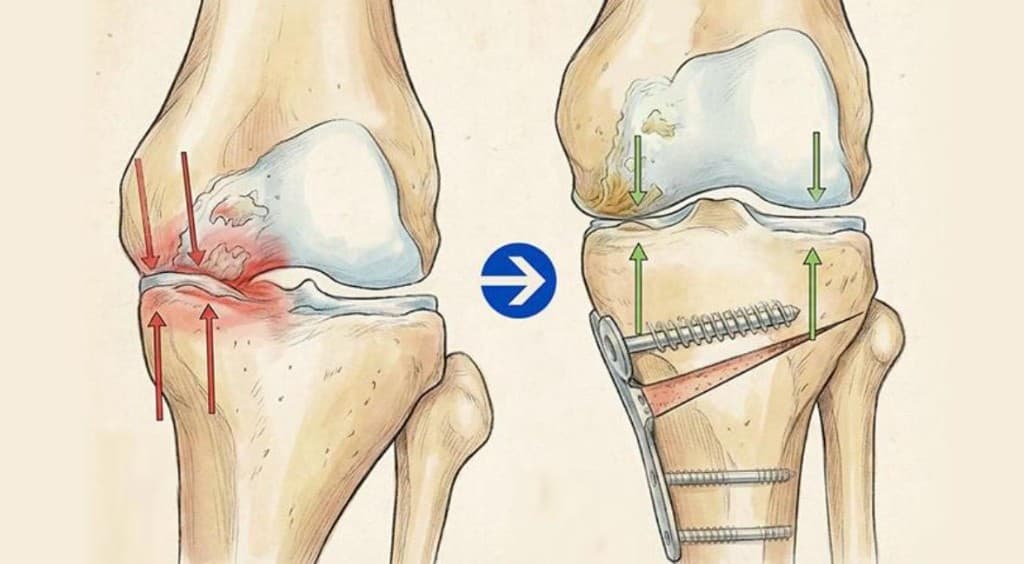
In many active patients under 55–60 years with unicompartmental knee arthritis (varus/bow-leg deformity), performing a joint replacement sacrifices healthy cruciate ligaments and normal proprioception. Knee joint preservation surgery alters the mechanical weight-bearing axis of the leg via High Tibial Osteotomy (HTO) or Distal Femoral Osteotomy (DFO), transferring the body's load from the damaged compartment to healthy articular cartilage, thereby halting degenerative progression.
The Biological Joint-Sparing Philosophy
By correcting mechanical weight-bearing malalignment through precision osteotomy and cartilage preservation, the load is shifted off damaged cartilage onto healthy bone—preserving your natural joint for years to come.
When Should You Consider Consultation for Joint Preservation & Osteotomy?
Specialist intervention is considered when joint pain or functional limitation significantly disrupts your daily life and conservative measures have been exhausted. Check if you experience any of the following:
Early or moderate osteoarthritis localized predominantly to the inner (medial) knee compartment.
Noticeable bow-leg (varus) or knock-knee (valgus) deformity causing localized pain.
Age under 60 with desire to continue high-impact physical work, running, or sports.
Desire to preserve natural knee ligaments and proprioception rather than undergo artificial replacement.
Focal cartilage defects following localized trauma.

Dr. Vijay Kumar
Verified SpecialistSenior Consultant Orthopaedic, Robotic Joint Replacement & Complex Articular Trauma Surgeon
“My surgical philosophy centers on biological preservation, anatomical restoration, and rapid functional recovery. By tailoring the intervention to each patient's unique anatomy and lifestyle, we achieve lasting pain relief and active mobility.”
The 4-Stage Precision Clinical Workflow
Full-Leg Weight-Bearing Alignment Analysis
Precise full-length standing hip-to-ankle scan (scanogram) analysis to calculate required angular correction in degrees.
Precision Biplanar Osteotomy Planning
Controlled, high-precision surgical cut into the proximal tibia under fluoroscopic guidance.
Rigid Locking Plate Stabilization
Gentle opening of the osteotomy gap to restore the mechanical weight-bearing axis through Fujisawa's point.
Protected Unloading & Gradual Rehabilitation
Rigid internal fixation using a dedicated anatomical locked titanium plate (e.g., TomoFix).
Stage 05: Joint Preservation Stage
Biological bone grafting / substitute placement if needed for opening wedge stability.
Treatment Modalities Offered
Dr. Vijay Kumar practices conservative joint-sparing protocols first, proceeding to advanced surgical intervention only when indicated:
Non-Surgical & Joint Sparing
- Unloader offloading knee bracing
- Targeted medial hamstring and lateral vastus rehabilitation
- Viscosupplementation and biologic intra-articular therapies
- Weight management counseling to reduce joint contact stress
Specialised Surgical Procedures
- High Tibial Osteotomy (Medial opening-wedge or lateral closing-wedge HTO)
- Distal Femoral Osteotomy (DFO) for valgus knee deformities
- Combined Osteotomy and Cartilage Restoration (Microfracture / OATS)
- Combined Osteotomy and Ligament Reconstruction (e.g., ACL + HTO for chronic instability with varus)
Recovery Timeline & Mobility Milestones
Weeks 1–4: Protected touch-down weight bearing with crutches, early passive range of motion.
Weeks 4–6: Progressive weight-bearing based on radiographic healing at osteotomy site.
Weeks 8–12: Radiographic consolidation, unassisted walking, muscle building.
Month 6+: Return to active occupations, recreational sports, and strenuous activities.
International Fellowship & Surgical Suite Records
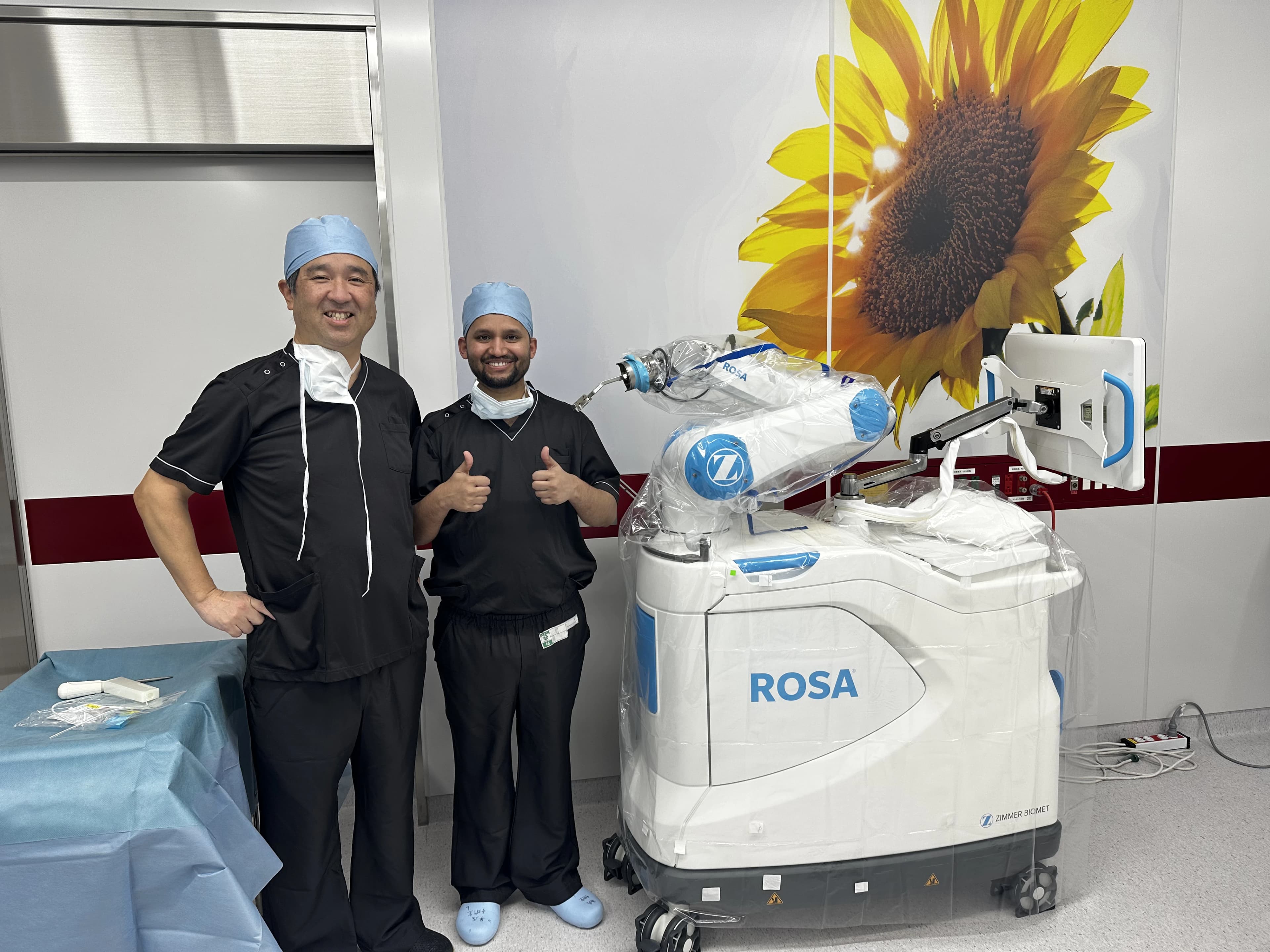
Intraoperative kinematics & 3D navigation alongside Japanese surgical faculty.
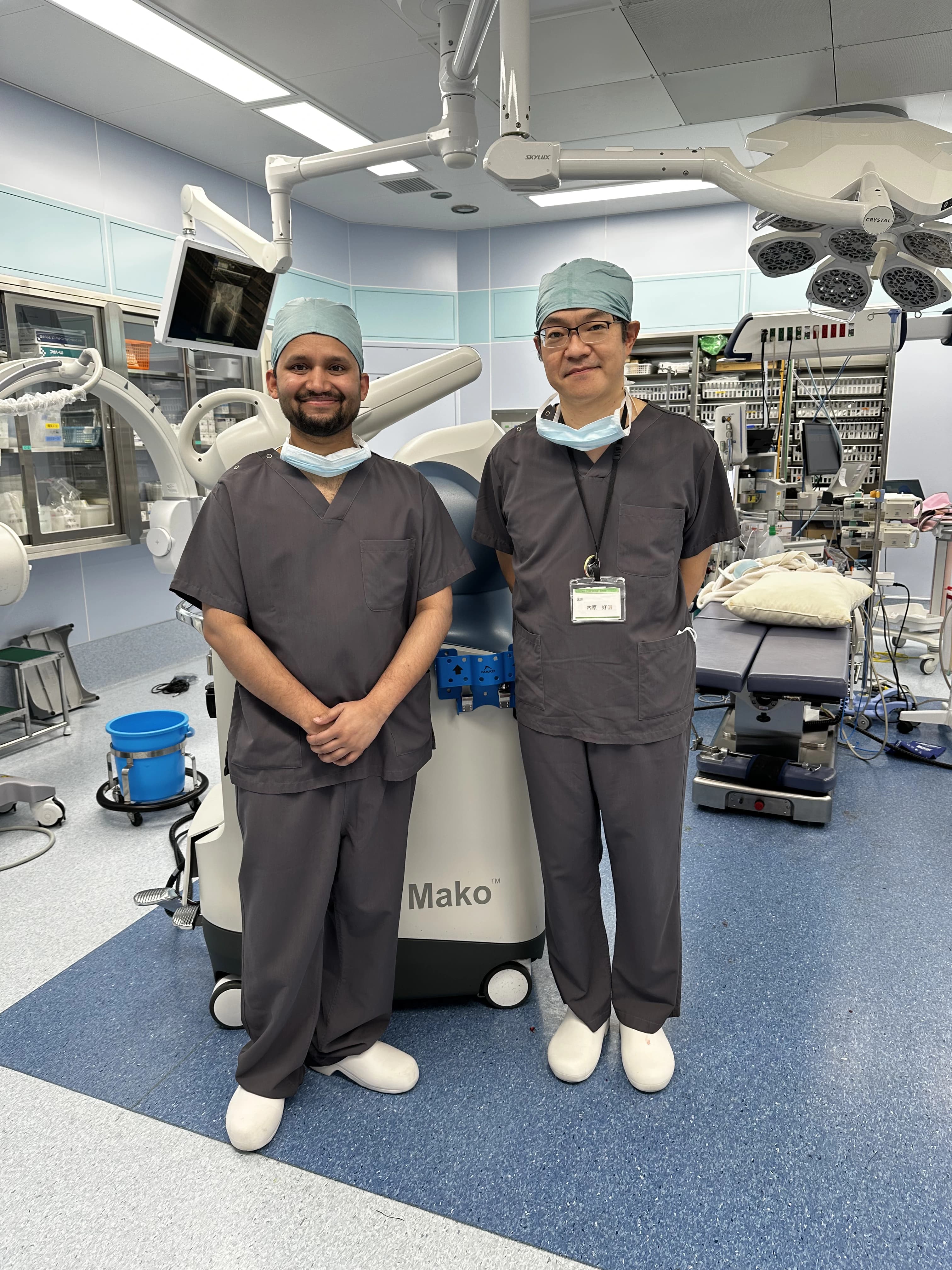
International fellowship-level precision applied to patient care in Patna.
Frequently Asked Questions on Joint Preservation & Osteotomy
Joint preservation encompasses non-replacement surgical interventions—most notably realigning osteotomies (such as High Tibial Osteotomy)—that redistribute body weight away from arthritic joint cartilage toward healthier bone, relieving pain and preserving the natural joint.