

Understanding Revision Knee & Hip Joint Replacement (Failed Implants)
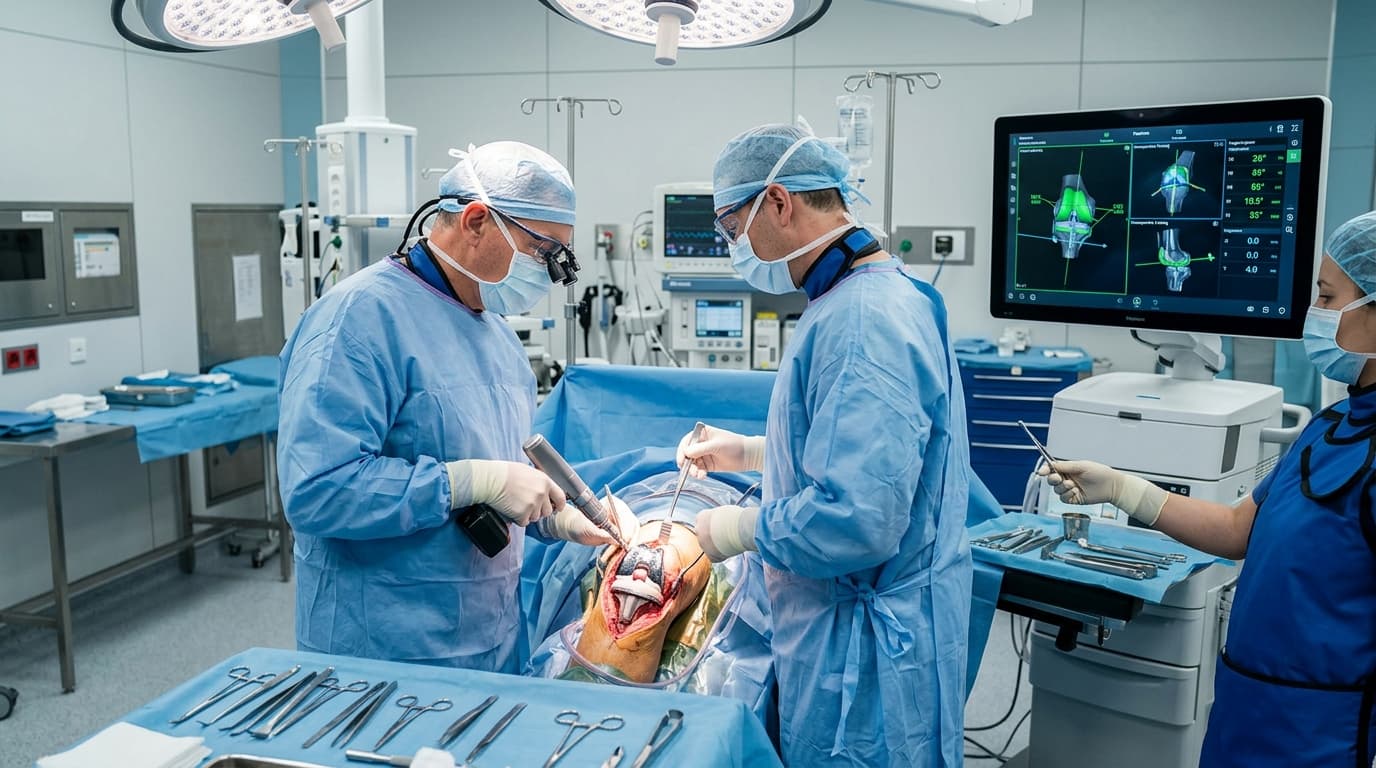
While primary joint replacements are among the most successful surgeries in modern medicine, artificial implants can eventually experience wear, aseptic loosening, instability, periprosthetic fractures, or deep infection after 15 to 25+ years (or earlier if poorly aligned). Revision joint arthroplasty is a complex sub-specialty requiring removal of the old components, management of surrounding bone loss using specialized trabecular metal cones and sleeves, and reconstruction with modular, constrained, or hinged revision implants.
Personalized Evidence-Based Clinical Care
Every treatment protocol is tailored specifically to your diagnosis, anatomy, and lifestyle goals, combining cutting-edge surgical precision with structured physiotherapy for optimal long-term outcomes.
When Should You Consider Consultation for Revision Joint Replacement?
Specialist intervention is considered when joint pain or functional limitation significantly disrupts your daily life and conservative measures have been exhausted. Check if you experience any of the following:
Recurrent or worsening pain in a previously replaced knee or hip joint after a prolonged pain-free period.
Sensation of instability, 'giving way', or clunking in an artificial joint.
Redness, warmth, swelling, or draining sinuses over a prior surgical scar suggesting possible infection.
Sudden inability to bear weight on a replaced joint following a fall (Periprosthetic Fracture).
Radiographic diagnosis of osteolysis (bone loss) or implant loosening around previous components.
Second opinion for persistent dissatisfaction or stiffness following prior joint replacement.

Dr. Vijay Kumar
Verified SpecialistSenior Consultant Orthopaedic, Robotic Joint Replacement & Complex Articular Trauma Surgeon
“My surgical philosophy centers on biological preservation, anatomical restoration, and rapid functional recovery. By tailoring the intervention to each patient's unique anatomy and lifestyle, we achieve lasting pain relief and active mobility.”
The 4-Stage Precision Clinical Workflow
Comprehensive Clinical & Imaging Diagnosis
Extensive pre-operative 3D imaging and serological workup to identify implant failure mode and bone defect classification (AORI / Paprosky).
Tailored Minimally Invasive Approach
Meticulous exposure and safe extraction of loose or failed components preserving remaining healthy host bone.
Anatomical Restoration & Tissue Decompression
Debridement of fibrous membrane and biological bone reconstruction using porous titanium cones or allografts.
Accelerated Functional Rehabilitation
Implantation of modular revision components with intramedullary stems for dual-zone diaphyseal fixation.
Stage 05: Treatment Phase
Comprehensive verification of joint kinematics, leg length equality, and balanced ligament stability.
Treatment Modalities Offered
Dr. Vijay Kumar practices conservative joint-sparing protocols first, proceeding to advanced surgical intervention only when indicated:
Non-Surgical & Joint Sparing
- Diagnostic workup (ESR, CRP, joint aspiration fluid analysis) to definitively rule out infection
- Temporary protected weight bearing with walker or crutches for early non-progressive periprosthetic stress
- Targeted physical therapy for soft-tissue contractures or minor extensor mechanism weakness
- Suppressive oral antibiotic therapy only in select non-surgical high-risk candidates
Specialised Surgical Procedures
- Single-Stage Revision Arthroplasty for aseptic loosening and mechanical wear
- Two-Stage Revision Arthroplasty with articulating antibiotic spacer for periprosthetic joint infection (PJI)
- Revision Knee Arthroplasty using CCK (Constrained Condylar Knee) or Rotating Hinge implants
- Revision Hip Arthroplasty with modular tapered revision stems and trabecular metal acetabular augments
- Internal Fixation / Revision Plating for Periprosthetic Fractures around existing implants
Recovery Timeline & Mobility Milestones
Days 1–3: Bedside mobilization, knee bending / hip precautions, walking with walker.
Weeks 2–6: Gradual transition from walker to single walking stick, progressive quadriceps and abductor strengthening.
Weeks 8–12: Independent unassisted walking, ascending and descending stairs comfortably.
Months 4–6: Full functional recovery, painless routine daily activities, long walks.
International Fellowship & Surgical Suite Records
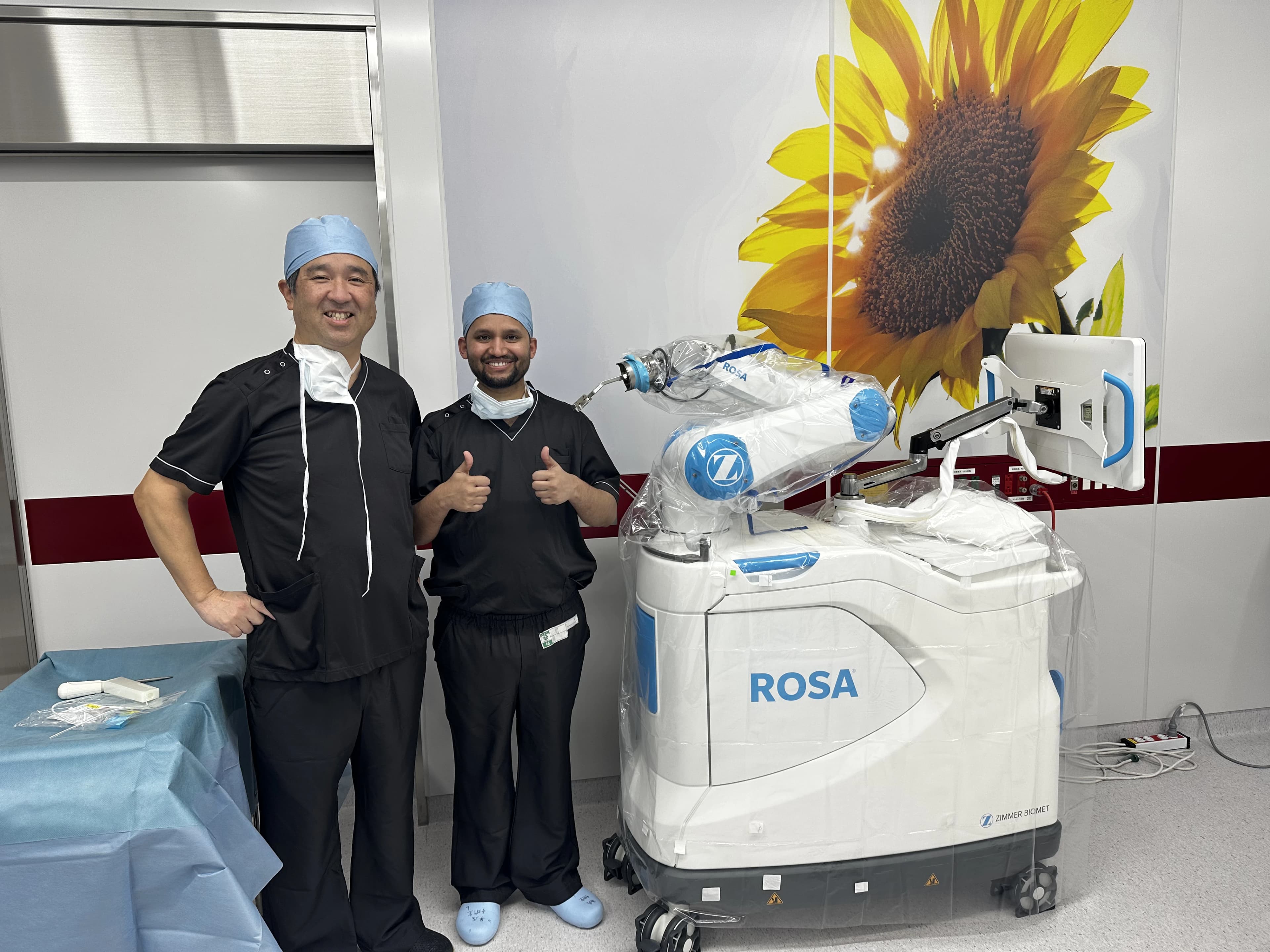
Intraoperative kinematics & 3D navigation alongside Japanese surgical faculty.
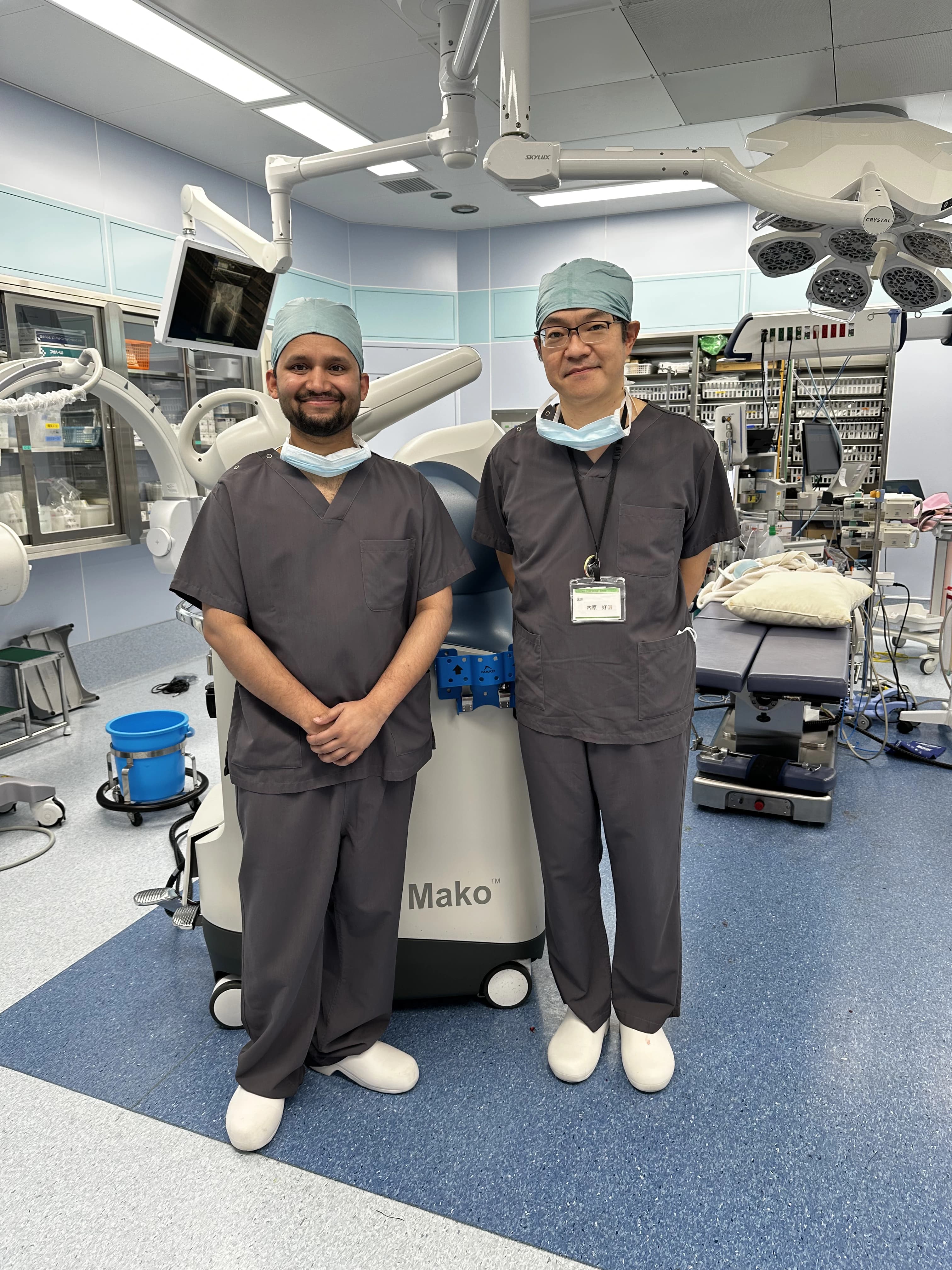
International fellowship-level precision applied to patient care in Patna.
Frequently Asked Questions on Revision Joint Replacement
The most common causes are aseptic loosening (microscopic wear particles causing the implant to loosen over decades), deep infection, recurrent joint instability, or bone fractures around the implant following a fall.