
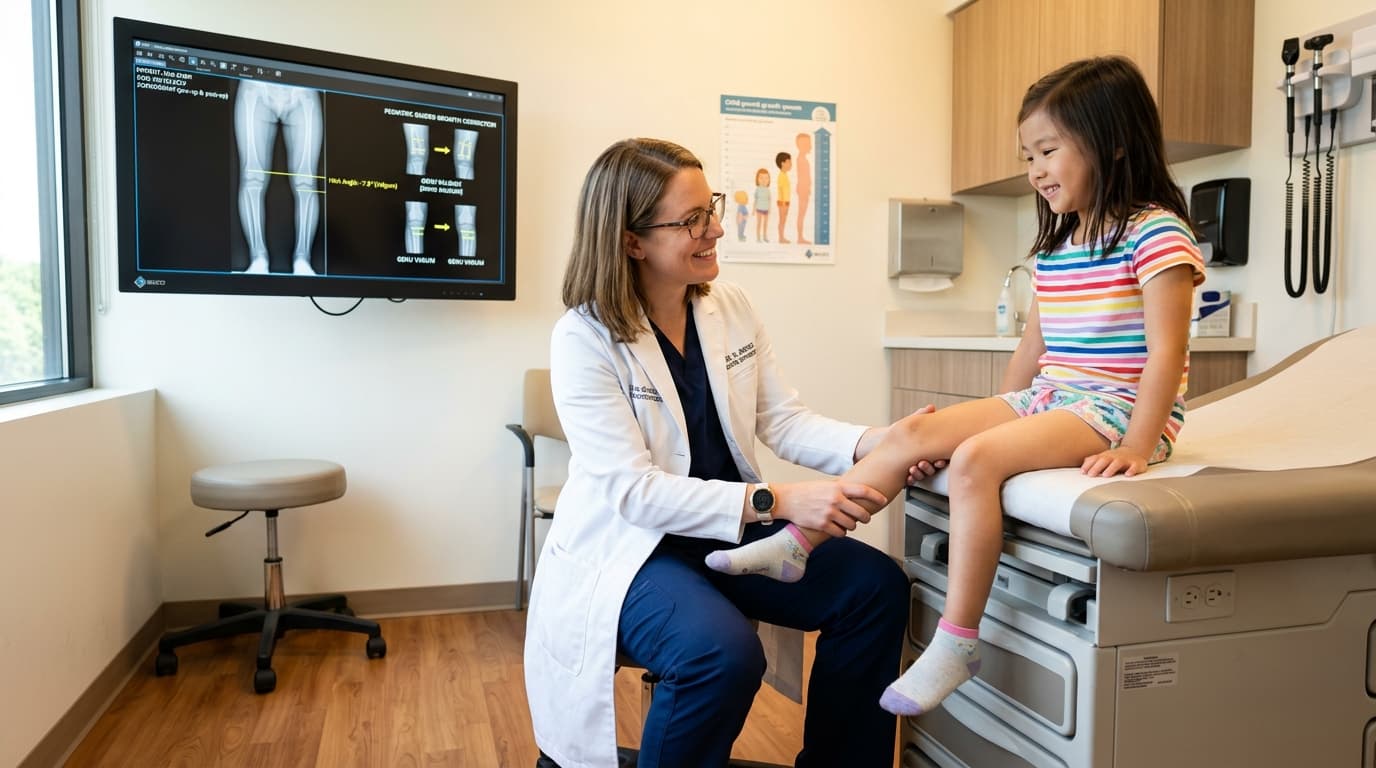

Understanding Knock Knees & Bow Legs (Guided Growth & Eight-Plates)
While mild bow legs and knock knees are part of normal toddler development, deformities that persist beyond expected ages require specialist attention. In growing children, major bone cutting and heavy casts are no longer necessary. Instead, 'guided growth' utilizes a miniature titanium 2-hole tension band plate ('eight-plate') temporarily placed across one side of the growth plate, gently guiding the leg straight as the child grows.
The Biological Joint-Sparing Philosophy
By correcting mechanical weight-bearing malalignment through precision osteotomy and cartilage preservation, the load is shifted off damaged cartilage onto healthy bone—preserving your natural joint for years to come.
When Should You Consider Consultation for Knock Knees & Bow Legs?
Specialist intervention is considered when joint pain or functional limitation significantly disrupts your daily life and conservative measures have been exhausted. Check if you experience any of the following:
Toddler whose knees stay wide apart (>5–6 cm) when ankles touch after age 2.
School-age child whose ankles stay wide apart when knees touch, causing gait clumsiness.
Child who trips or falls frequently or complains of knee/ankle pain after play.
Asymmetric angular deformity where one leg is noticeably more crooked.
Visible worsening of leg alignment on sequential family photographs.

Dr. Vijay Kumar
Verified SpecialistSenior Consultant Orthopaedic, Robotic Joint Replacement & Complex Articular Trauma Surgeon
“My surgical philosophy centers on biological preservation, anatomical restoration, and rapid functional recovery. By tailoring the intervention to each patient's unique anatomy and lifestyle, we achieve lasting pain relief and active mobility.”
The 4-Stage Precision Clinical Workflow
Full-Leg Weight-Bearing Alignment Analysis
Full-length standing long-leg scanogram calculating mechanical axis deviation.
Precision Biplanar Osteotomy Planning
Outpatient procedure performed through a cosmetically concealed 2-cm incision.
Rigid Locking Plate Stabilization
Placement of a miniature titanium eight-plate bridging one side of the growth plate with two smooth screws.
Protected Unloading & Gradual Rehabilitation
Immediate post-operative weight bearing with no casts or crutches required.
Stage 05: Joint Preservation Stage
Follow-up monitoring every 3–4 months until legs are straight, followed by easy plate removal.
Treatment Modalities Offered
Dr. Vijay Kumar practices conservative joint-sparing protocols first, proceeding to advanced surgical intervention only when indicated:
Non-Surgical & Joint Sparing
- Observation and serial photographic tracking for physiologic toddler bow legs
- Nutritional correction (Vitamin D and Calcium optimization)
- Custom day/night corrective braces for infantile Blount's disease
Specialised Surgical Procedures
- Minimally Invasive Guided Growth / Eight-Plate Application (Hemiepiphysiodesis)
- Percutaneous epiphysiodesis for older adolescents near growth completion
- Corrective Osteotomy reserved for mature adolescents after growth plates fuse
Recovery Timeline & Mobility Milestones
Day 1: Full weight-bearing walking immediately upon recovery.
Week 1: Return to school and normal daily routine.
Weeks 2–3: Resumption of regular physical education and running.
Months 6–12: Progressive natural straightening confirmed on standing scanograms; outpatient removal of plates once straight.
International Fellowship & Surgical Suite Records
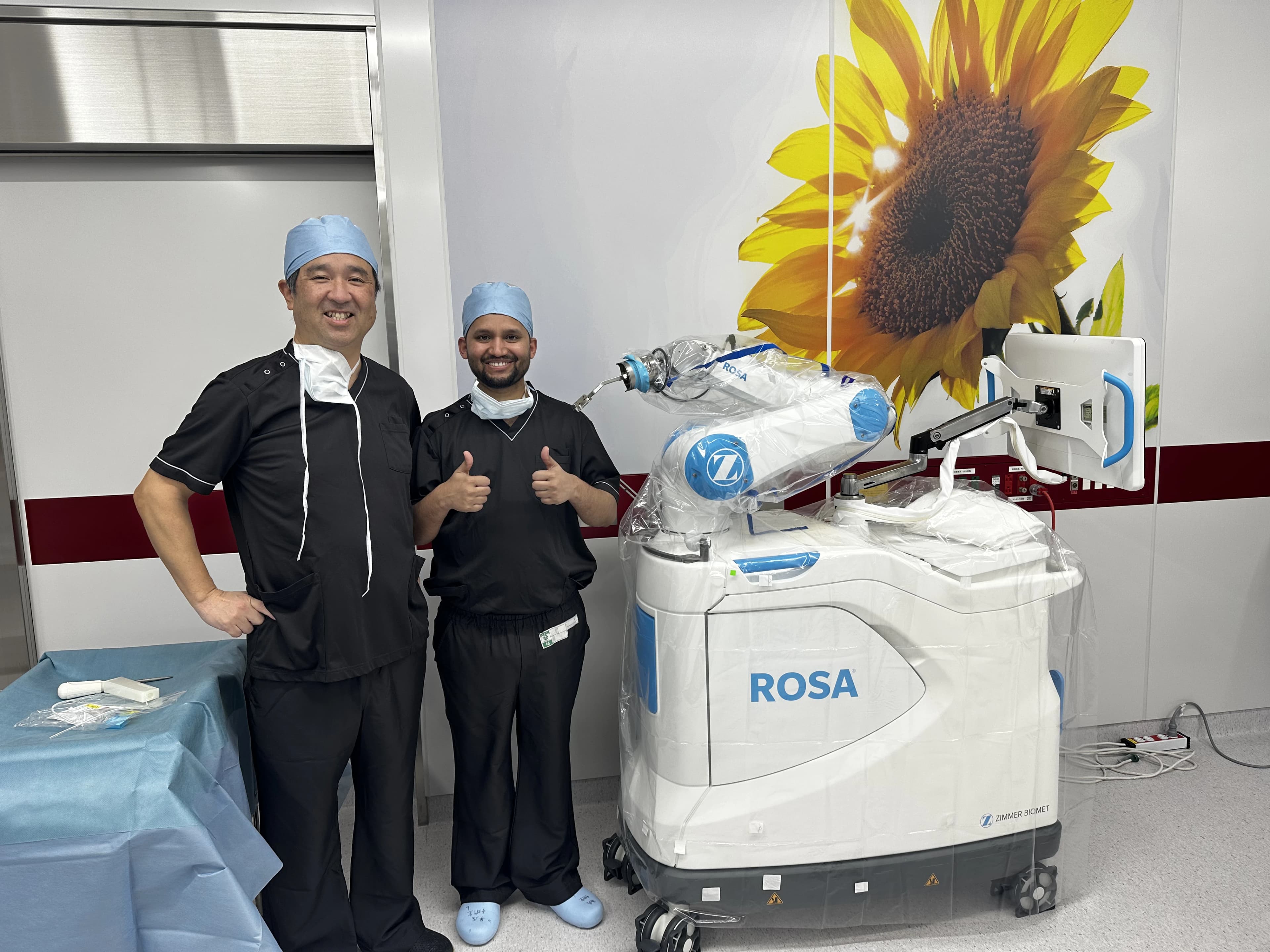
Intraoperative kinematics & 3D navigation alongside Japanese surgical faculty.
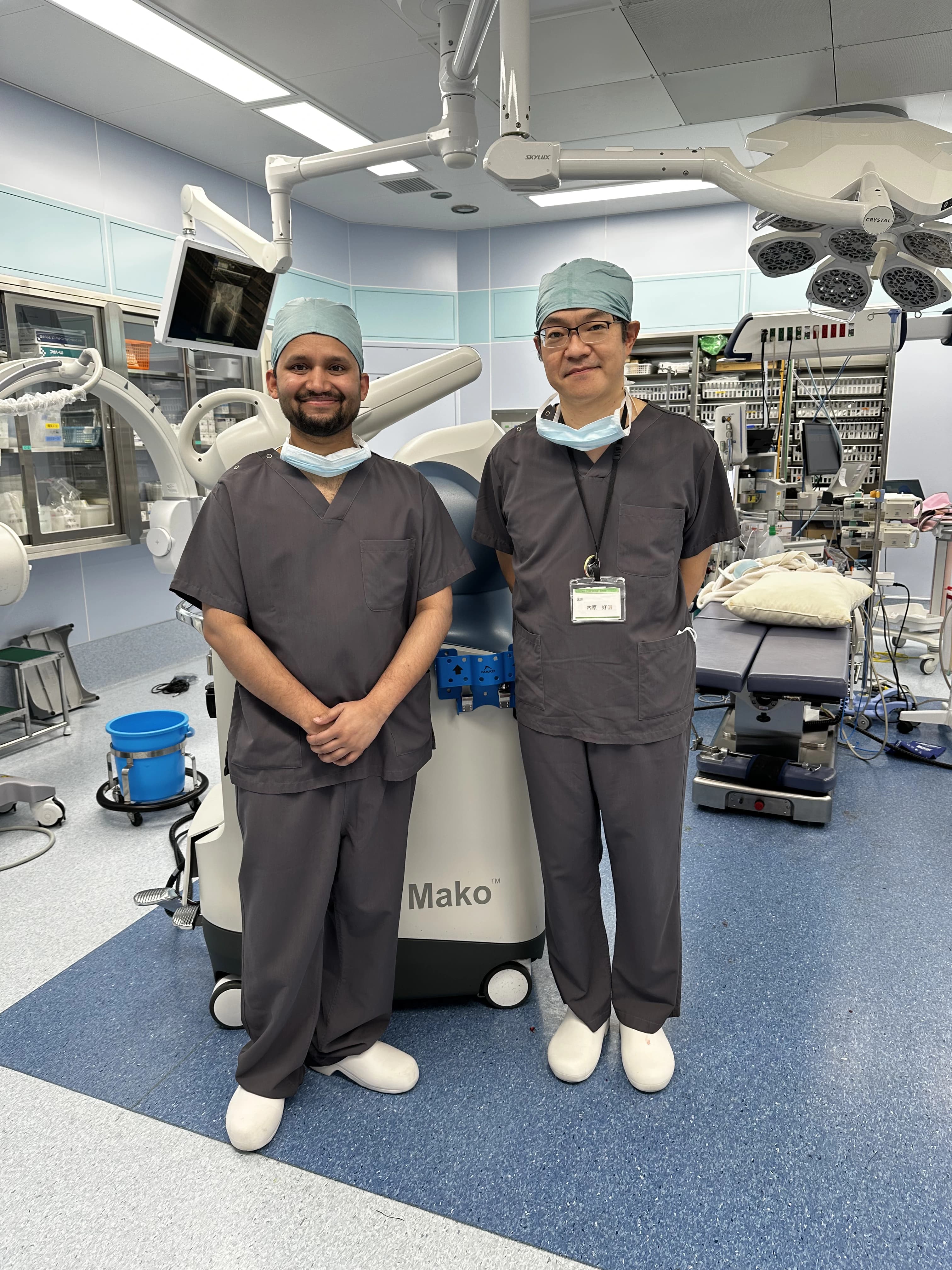
International fellowship-level precision applied to patient care in Patna.
Frequently Asked Questions on Knock Knees & Bow Legs
Guided growth is ideal while the child still has active growth remaining—typically between 4 and 14 years old.