
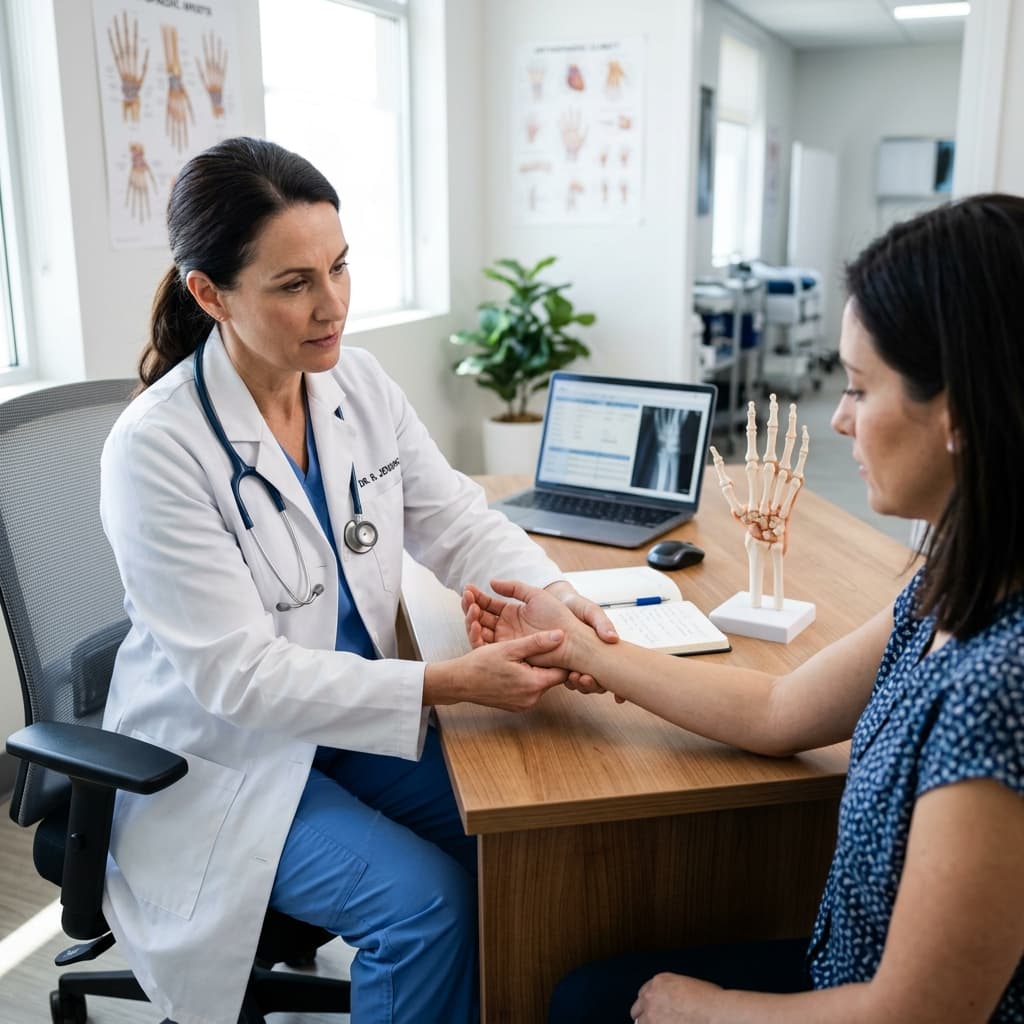

Understanding Elbow & Wrist Arthroscopy & Minimally Invasive Surgery
The elbow and wrist are delicate, high-mobility joints prone to sports overuse, loose bodies (osteochondritis dissecans / OCD), post-traumatic stiffness, and triangular fibrocartilage complex (TFCC) tears. Traditional open surgery requires extensive muscle detachment, which frequently leads to scarring and prolonged stiffness. Minimally invasive 4K elbow and wrist arthroscopy allows direct visualization and repair through tiny pinhole portals, preserving nerve branches, minimizing scarring, and enabling early functional mobility.
Personalized Evidence-Based Clinical Care
Every treatment protocol is tailored specifically to your diagnosis, anatomy, and lifestyle goals, combining cutting-edge surgical precision with structured physiotherapy for optimal long-term outcomes.
When Should You Consider Consultation for Elbow & Wrist Arthroscopy?
Specialist intervention is considered when joint pain or functional limitation significantly disrupts your daily life and conservative measures have been exhausted. Check if you experience any of the following:
Sudden catching, clicking, or locking of the elbow that prevents full straightening or bending.
Chronic outer elbow pain (refractory Tennis Elbow) that has not improved with physiotherapy or injections.
Ulnar-sided wrist pain (pinky side) that worsens with twisting motions (turning doorknobs, opening jars).
Post-traumatic elbow stiffness following a prior fracture or dislocation.
Swelling, warmth, and motion restriction in the wrist or elbow from inflammatory synovitis.

Dr. Vijay Kumar
Verified SpecialistSenior Consultant Orthopaedic, Robotic Joint Replacement & Complex Articular Trauma Surgeon
“My surgical philosophy centers on biological preservation, anatomical restoration, and rapid functional recovery. By tailoring the intervention to each patient's unique anatomy and lifestyle, we achieve lasting pain relief and active mobility.”
The 4-Stage Precision Clinical Workflow
Comprehensive Clinical & Imaging Diagnosis
Careful anatomical portal mapping protecting radial, median, and ulnar nerves under optical magnification.
Tailored Minimally Invasive Approach
Insertion of ultra-fine 2.7-mm / 4-mm 4K arthroscope into anterior and posterior elbow compartments.
Anatomical Restoration & Tissue Decompression
Meticulous extraction of loose bone fragments and clearing of inflamed synovial lining.
Accelerated Functional Rehabilitation
Division of contracted joint capsule restoring full extension and flexion.
Stage 05: Treatment Phase
Watertight portal closure with cosmetic adhesive strips.
Treatment Modalities Offered
Dr. Vijay Kumar practices conservative joint-sparing protocols first, proceeding to advanced surgical intervention only when indicated:
Non-Surgical & Joint Sparing
- Forearm counterforce bracing and wrist immobilization splints
- Eccentric extensor strengthening and wrist kinetic chain rehabilitation
- Ultrasound-guided Platelet-Rich Plasma (PRP) or steroid injection
- Ergonomic keyboard and workstation modifications
Specialised Surgical Procedures
- Arthroscopic Removal of Intra-Articular Loose Bodies (elbow/wrist)
- All-Arthroscopic Tennis Elbow Release (ECRB debridement)
- Arthroscopic Elbow Arthrolysis (capsulectomy restoring range of motion)
- Arthroscopic TFCC Repair / Debridement for wrist stability
- Arthroscopic Ganglion Cyst Excision
Recovery Timeline & Mobility Milestones
Days 1–3: Immediate finger and wrist movement, gentle active elbow flexion/extension.
Weeks 1–2: Normal daily light activities, typing, driving.
Weeks 3–4: Progressive forearm strengthening and resistance exercises.
Weeks 6–8: Full return to tennis, golf, weightlifting, and sports.
International Fellowship & Surgical Suite Records
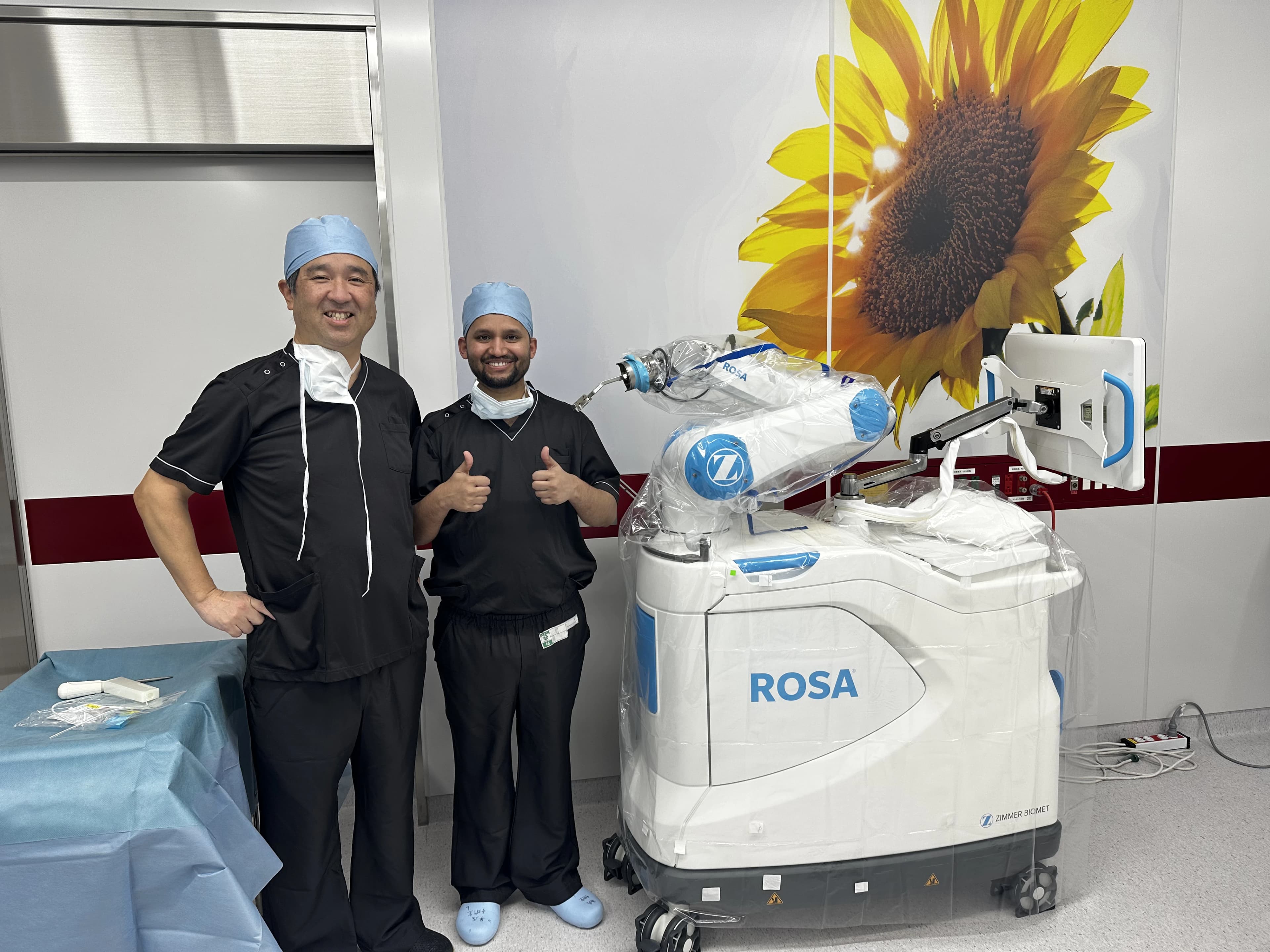
Intraoperative kinematics & 3D navigation alongside Japanese surgical faculty.
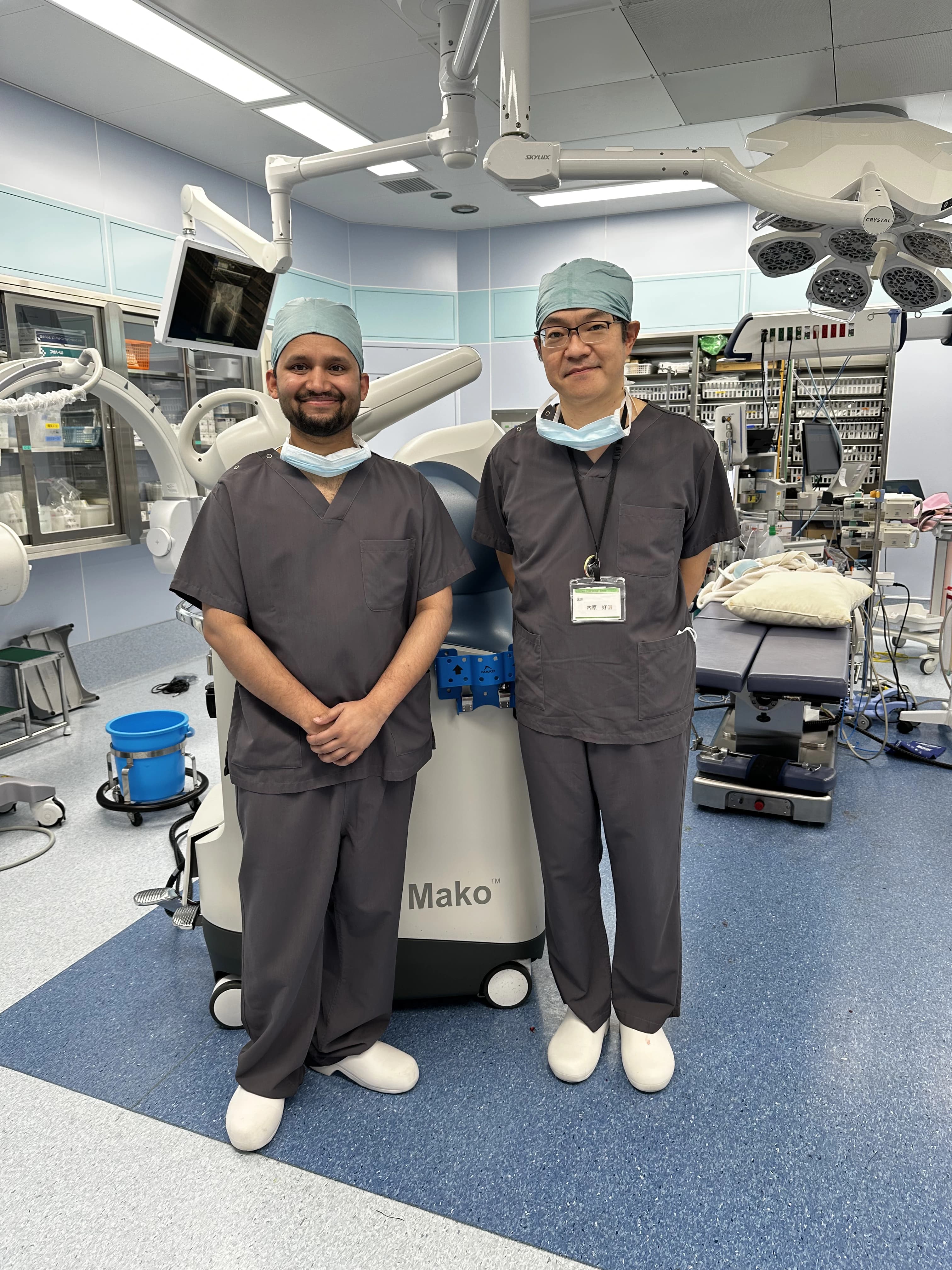
International fellowship-level precision applied to patient care in Patna.
Frequently Asked Questions on Elbow & Wrist Arthroscopy
Loose pieces of bone or cartilage float within the joint fluid and can become trapped between joint surfaces, causing sudden locking, extreme pain, and irreversible gouging of healthy cartilage.