
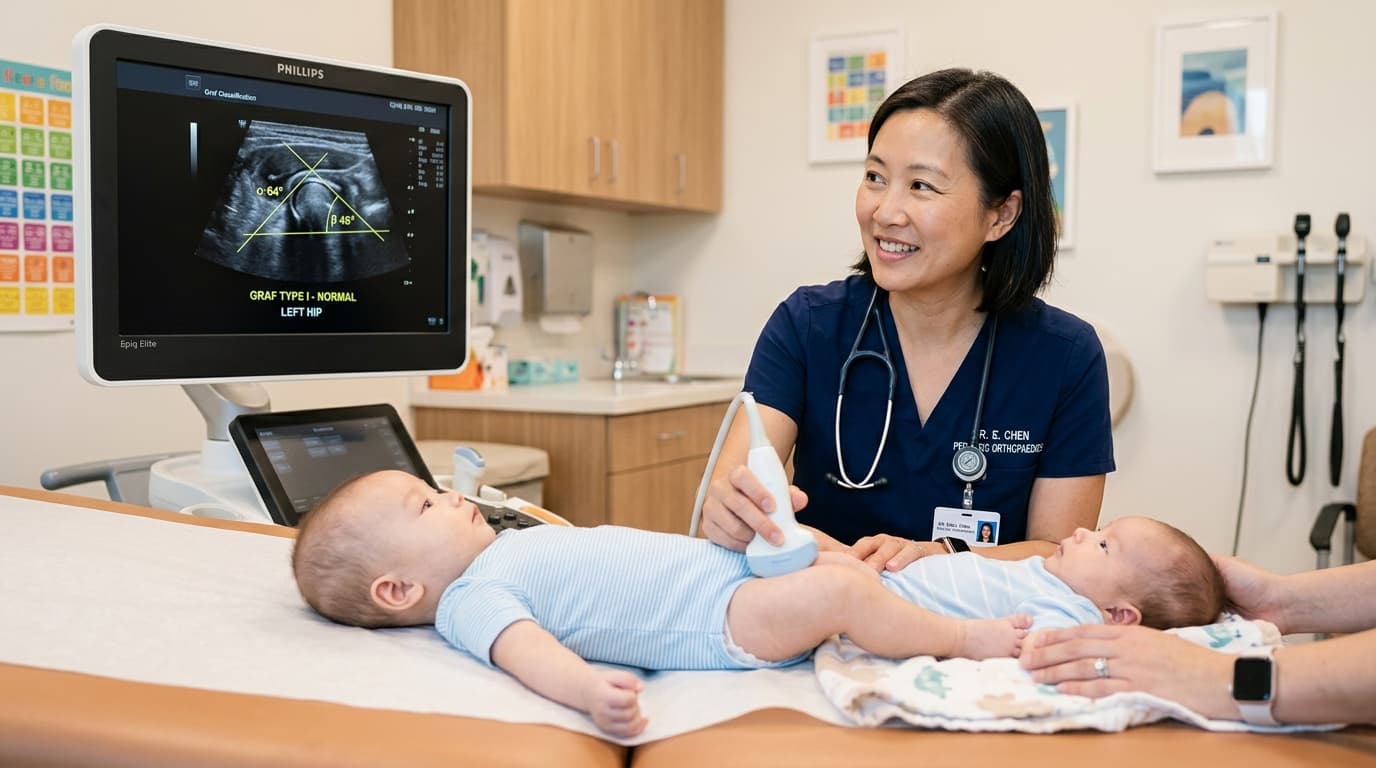

Understanding Developmental Dysplasia of the Hip (DDH) & Hip Screening
Developmental Dysplasia of the Hip (DDH) encompasses a spectrum of infant hip abnormalities ranging from mild acetabular shallowness to complete dislocation. When diagnosed in early infancy, over 90% of cases are cured completely without surgery using dynamic positioning braces like the Pavlik harness. If diagnosed late, walking-age children develop a limp and early severe hip arthritis, requiring surgical reduction and pelvic realignment.
The Biological Joint-Sparing Philosophy
By correcting mechanical weight-bearing malalignment through precision osteotomy and cartilage preservation, the load is shifted off damaged cartilage onto healthy bone—preserving your natural joint for years to come.
When Should You Consider Consultation for Hip Dysplasia (DDH)?
Specialist intervention is considered when joint pain or functional limitation significantly disrupts your daily life and conservative measures have been exhausted. Check if you experience any of the following:
Newborn or infant with asymmetric thigh or buttock skin creases.
Audible or palpable 'clunk' or click during routine diaper changing or hip movement.
Limited hip abduction where one infant leg cannot be opened outwards as wide as the other.
Infants with risk factors: breech presentation, female firstborn, or positive family history.
Toddler who walks with a noticeable waddling limp or asymmetric pelvic tilt.

Dr. Vijay Kumar
Verified SpecialistSenior Consultant Orthopaedic, Robotic Joint Replacement & Complex Articular Trauma Surgeon
“My surgical philosophy centers on biological preservation, anatomical restoration, and rapid functional recovery. By tailoring the intervention to each patient's unique anatomy and lifestyle, we achieve lasting pain relief and active mobility.”
The 4-Stage Precision Clinical Workflow
Full-Leg Weight-Bearing Alignment Analysis
Thorough clinical examination and high-resolution ultrasound/radiographic measurement.
Precision Biplanar Osteotomy Planning
For infants: precise custom fitting of the Pavlik harness maintaining 100° flexion and 45° abduction.
Rigid Locking Plate Stabilization
For toddlers: minimally invasive arthrogram-guided closed reduction or gentle open clearance.
Protected Unloading & Gradual Rehabilitation
Application of a lightweight, breathable fiberglass hip spica cast protecting the joint.
Stage 05: Joint Preservation Stage
Long-term developmental follow-up ensuring complete bony acetabular roof formation.
Treatment Modalities Offered
Dr. Vijay Kumar practices conservative joint-sparing protocols first, proceeding to advanced surgical intervention only when indicated:
Non-Surgical & Joint Sparing
- Dynamic Pavlik Harness application for infants under 6 months (gold standard non-surgical cure)
- Semi-rigid abduction splints for older babies (4–6 months)
- Serial high-resolution dynamic hip ultrasound tracking acetabular maturation
Specialised Surgical Procedures
- Closed Reduction and Hip Spica Cast under gentle anesthesia with arthrogram (6–18 months)
- Open Reduction through anterior groin approach removing obstacles to reduction
- Pelvic Acetabular Osteotomy (Pemberton / Dega / Salter) to deepen shallow hip socket in older children
- Femoral Derotational Shortening Osteotomy
Recovery Timeline & Mobility Milestones
Weeks 1–6: Harness wear; serial ultrasound confirming stable reduction and deepening of socket.
Weeks 6–12: Weaning off harness to night-time only; full unassisted leg movement.
Months 12–18: Normal walking milestones reached on schedule without limp.
Ages 2–10: Routine annual checkups confirming robust, spherical femoral head coverage.
International Fellowship & Surgical Suite Records
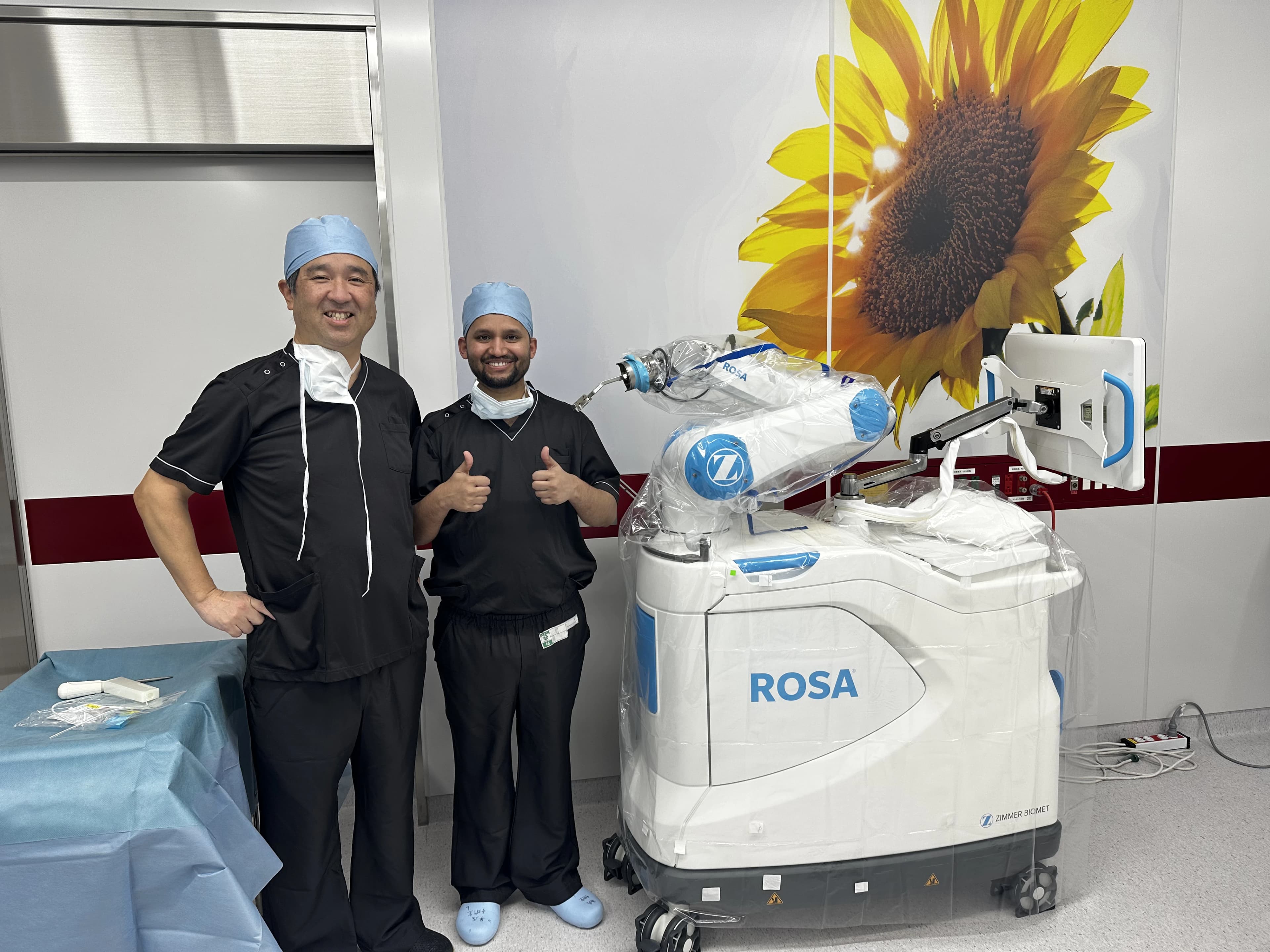
Intraoperative kinematics & 3D navigation alongside Japanese surgical faculty.
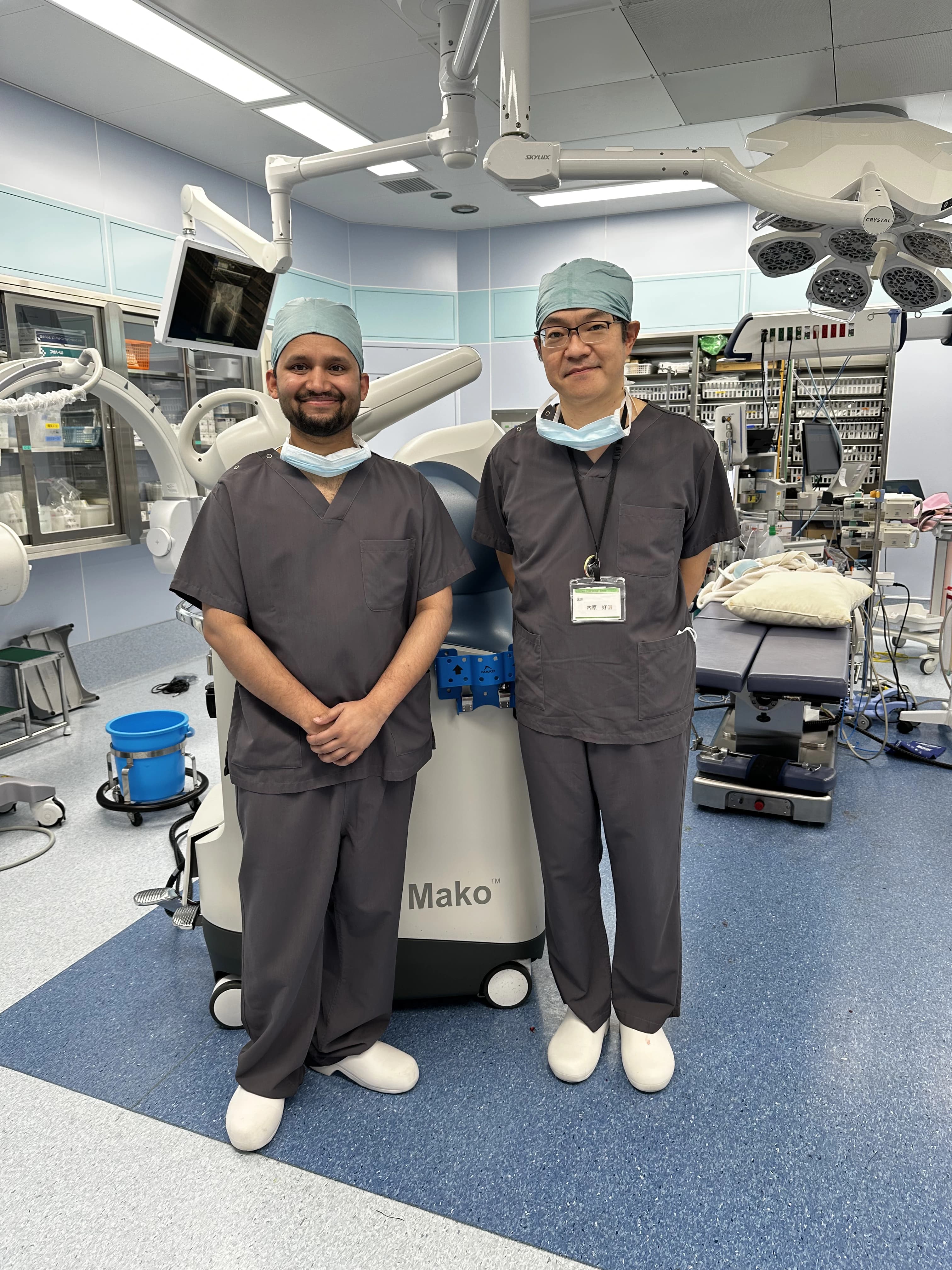
International fellowship-level precision applied to patient care in Patna.
Frequently Asked Questions on Hip Dysplasia (DDH)
Not at all. The Pavlik harness is made of soft, padded straps that gently hold the baby's legs in a comfortable 'frog-leg' position while allowing normal kicking movement.