
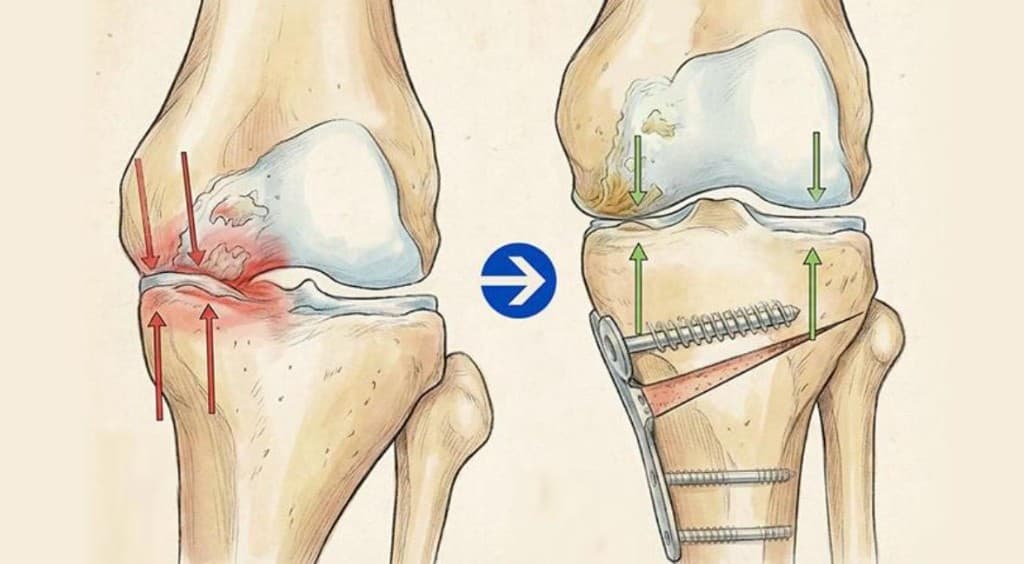

Understanding Corrective Osteotomies & Alignment Correction
When mechanical limb malalignment (bow legs or knock knees) concentrates body weight onto one side of the knee, that compartment suffers accelerated cartilage wear, severe pain, and progressive deformity. Corrective osteotomy precisely cuts and realigns the bone to redistribute body weight onto healthy, undamaged joint surfaces, relieving pain and halting arthritis progression.
The Biological Joint-Sparing Philosophy
By correcting mechanical weight-bearing malalignment through precision osteotomy and cartilage preservation, the load is shifted off damaged cartilage onto healthy bone—preserving your natural joint for years to come.
When Should You Consider Consultation for Corrective Osteotomy?
Specialist intervention is considered when joint pain or functional limitation significantly disrupts your daily life and conservative measures have been exhausted. Check if you experience any of the following:
Localized knee pain on the inner or outer side during walking or standing.
Visible bow-leg or knock-knee deformity that has become progressively more noticeable.
Active individuals under age 60 desiring to avoid artificial joint replacement.
Desire to maintain full native knee flexion, kneeling, and vigorous athletic activities.
Failure of unloader braces or physical therapy to maintain lasting pain relief.

Dr. Vijay Kumar
Verified SpecialistSenior Consultant Orthopaedic, Robotic Joint Replacement & Complex Articular Trauma Surgeon
“My surgical philosophy centers on biological preservation, anatomical restoration, and rapid functional recovery. By tailoring the intervention to each patient's unique anatomy and lifestyle, we achieve lasting pain relief and active mobility.”
The 4-Stage Precision Clinical Workflow
Full-Leg Weight-Bearing Alignment Analysis
Full-length standing scanography calculating the exact mechanical axis.
Precision Biplanar Osteotomy Planning
Minimally invasive approach to proximal tibia or distal femur.
Rigid Locking Plate Stabilization
Calibrated osteotomy opening to the calculated realignment angle.
Protected Unloading & Gradual Rehabilitation
Rigid fixation with high-strength titanium locking compression plate.
Stage 05: Joint Preservation Stage
Early continuous passive motion with progressive partial weight bearing.
Treatment Modalities Offered
Dr. Vijay Kumar practices conservative joint-sparing protocols first, proceeding to advanced surgical intervention only when indicated:
Non-Surgical & Joint Sparing
- Lateral/medial wedge shoe insoles
- Custom unloader knee bracing
- Targeted vastus medialis kinetic chain therapy
- Platelet-Rich Plasma (PRP) injections
Specialised Surgical Procedures
- Medial Opening Wedge High Tibial Osteotomy (HTO)
- Distal Femoral Osteotomy (DFO)
- Combined Osteotomy with Arthroscopic Cartilage Repair
- Derotational Osteotomy
Recovery Timeline & Mobility Milestones
Weeks 1–4: Gentle motion, touch-down weight bearing with crutches.
Weeks 6–8: Progression to full weight bearing as bone consolidates.
Weeks 8–12: Unassisted walking with corrected straight leg alignment.
Months 4–6: Clearance for jogging, sports, and heavy physical work.
International Fellowship & Surgical Suite Records
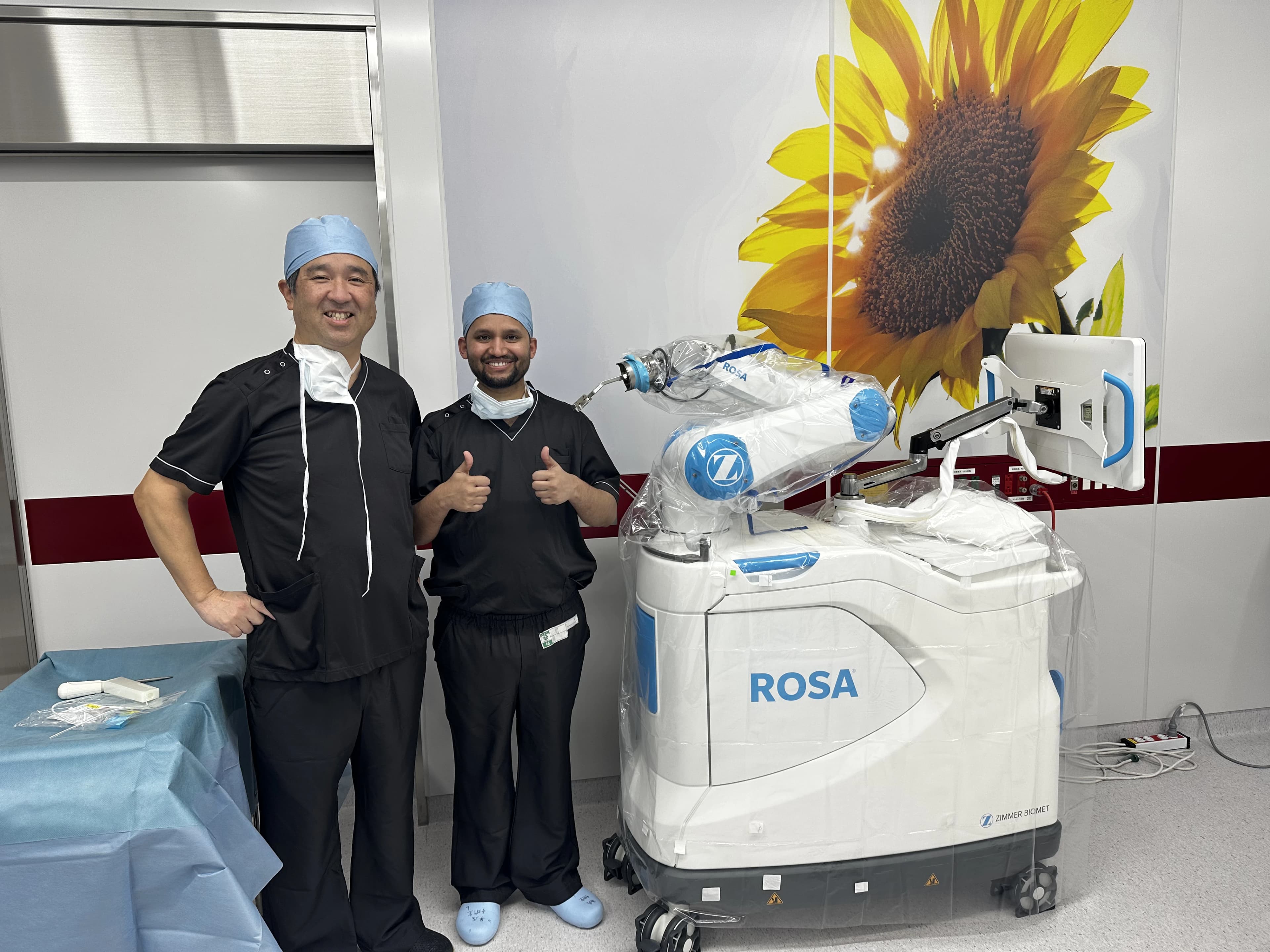
Intraoperative kinematics & 3D navigation alongside Japanese surgical faculty.
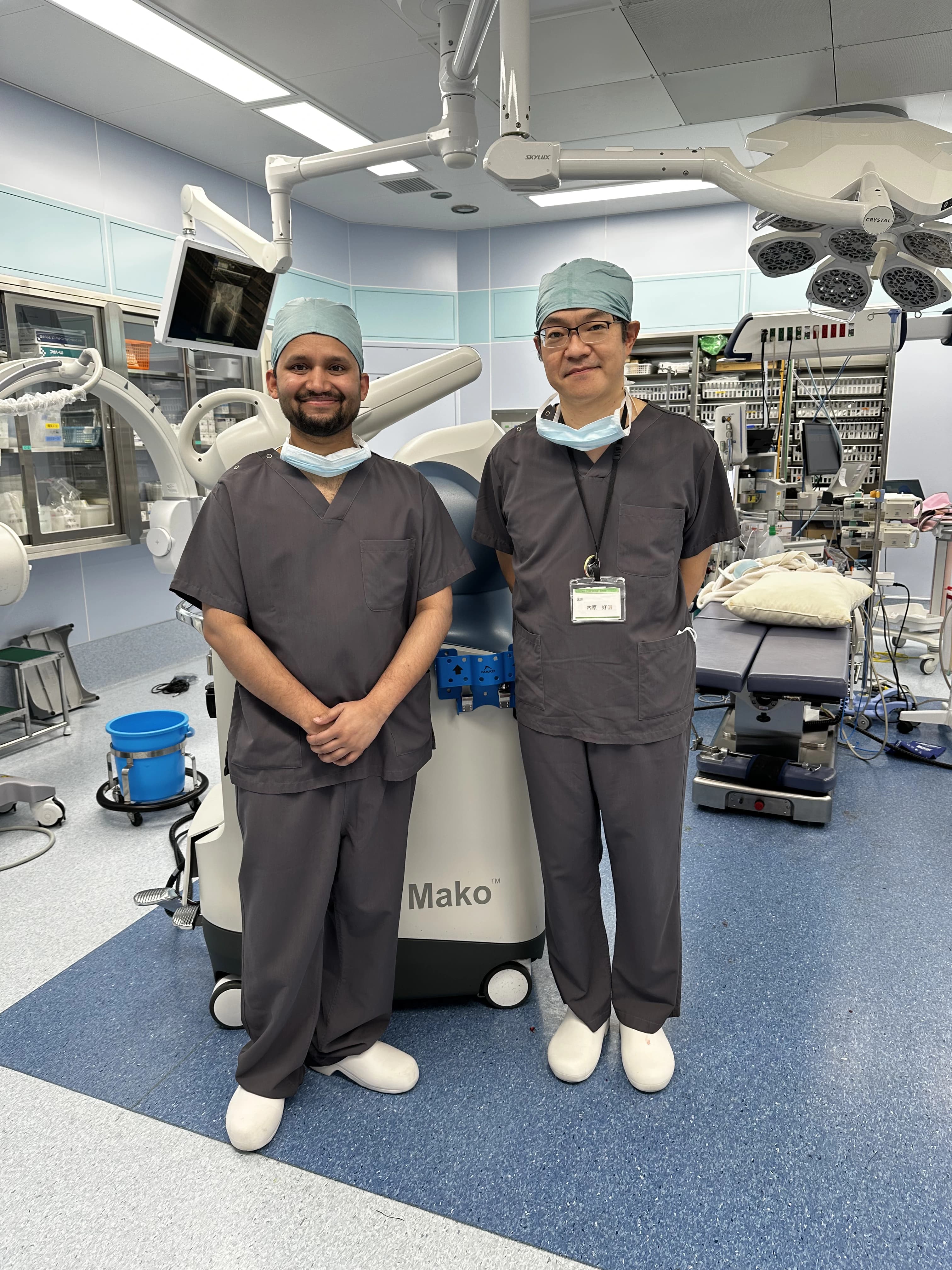
International fellowship-level precision applied to patient care in Patna.
Frequently Asked Questions on Corrective Osteotomy
A well-aligned HTO successfully delays or eliminates the need for knee replacement for 10 to 15+ years in the vast majority of patients.