
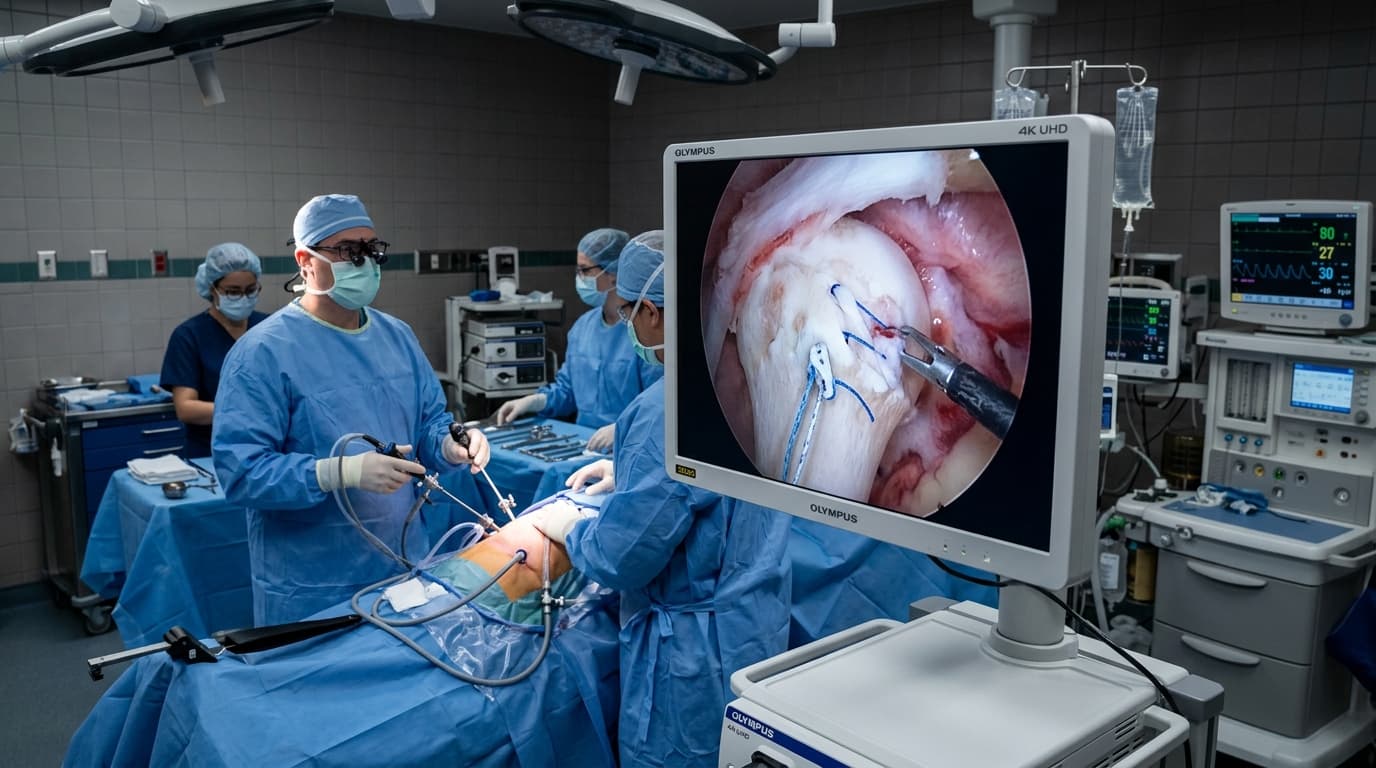

Understanding Arthroscopic Rotator Cuff Repair & Shoulder Instability
The rotator cuff is a specialized group of four tendons (supraspinatus, infraspinatus, subscapularis, and teres minor) that dynamic stabilize the shoulder ball within its shallow socket. Chronic impingement, bone spurs, repetitive overhead strain, or acute falls can cause progressive tendon tears, resulting in severe night pain, weakness when lifting the arm, and restricted movement. In younger active individuals, traumatic labral tears (Bankart lesions) lead to recurrent shoulder dislocations. 4K shoulder arthroscopy repairs these soft tissue structures anatomically without cutting through major shoulder muscles.
The Minimally Invasive Arthroscopy Advantage
Advanced 4K keyhole arthroscopy allows complete visualization and anatomical repair through pencil-thin incisions, eliminating extensive soft-tissue cutting, preserving natural joint biomechanics, and drastically accelerating recovery.
When Should You Consider Consultation for Rotator Cuff & Shoulder Repair?
Specialist intervention is considered when joint pain or functional limitation significantly disrupts your daily life and conservative measures have been exhausted. Check if you experience any of the following:
Deep, aching shoulder pain that intensifies at night and prevents sleeping on the affected side.
Noticeable weakness when attempting to lift the arm overhead, reach behind your back, or carry objects.
Pain and catching sensations when raising the arm between 60° and 120° (painful arc syndrome).
History of shoulder dislocation with ongoing sensation that the shoulder is loose, unstable, or slipping out.
Lack of sustained improvement following oral medications, physiotherapy, or subacromial injections.
Sudden loss of shoulder power following a fall or lifting heavy luggage.

Dr. Vijay Kumar
Verified SpecialistSenior Consultant Orthopaedic, Robotic Joint Replacement & Complex Articular Trauma Surgeon
“My surgical philosophy centers on biological preservation, anatomical restoration, and rapid functional recovery. By tailoring the intervention to each patient's unique anatomy and lifestyle, we achieve lasting pain relief and active mobility.”
The 4-Stage Precision Clinical Workflow
Pre-Operative MRI & Diagnostic Mapping
Accessing the shoulder joint and subacromial space through 3 to 4 tiny keyhole incisions (~4 mm each).
High-Definition 4K Arthroscopic Access
Thorough 4K optical assessment of the rotator cuff tear pattern, mobility, and footprint preparation on the greater tuberosity.
Precision Anatomical Repair / Reconstruction
Removal of subacromial bone spurs and inflamed bursal tissue to create ample clearance for the tendon.
Bio-Fixation & Sports Rehab Roadmap
Insertion of bio-composite or PEEK suture anchors into the bone footprint.
Stage 05: Arthroscopic Execution
Criss-cross suture bridge knotless fixation, pressing the tendon firmly down against healthy bone for optimal biological healing.
Treatment Modalities Offered
Dr. Vijay Kumar practices conservative joint-sparing protocols first, proceeding to advanced surgical intervention only when indicated:
Non-Surgical & Joint Sparing
- Structured rotator cuff and scapular stabilizer muscle physical therapy
- Postural correction and subacromial space expansion exercises
- Targeted non-steroidal anti-inflammatory therapy and ice applications
- Ultrasound-guided subacromial corticosteroid or PRP injections for inflammation control
Specialised Surgical Procedures
- All-Arthroscopic Double-Row Suture Bridge Rotator Cuff Repair
- Arthroscopic Bankart Repair for recurrent anterior shoulder instability
- Arthroscopic Subacromial Decompression and Acromioplasty (bone spur removal)
- Biceps Tenodesis / Tenotomy for associated long-head biceps tendon pathology
- Superior Capsular Reconstruction (SCR) or Reverse Shoulder Arthroplasty for massive irreparable cuff tears
Recovery Timeline & Mobility Milestones
Weeks 1–4: Protected sling wear, gentle passive pendulum exercises, hand and elbow movement.
Weeks 4–6: Weaning off the sling, initiation of active-assisted range of motion under therapist guidance.
Weeks 8–12: Active unassisted overhead reach, gradual light resistance band strengthening.
Months 4–6: Progressive muscular conditioning, return to golf, swimming, tennis, and heavy lifting.
International Fellowship & Surgical Suite Records
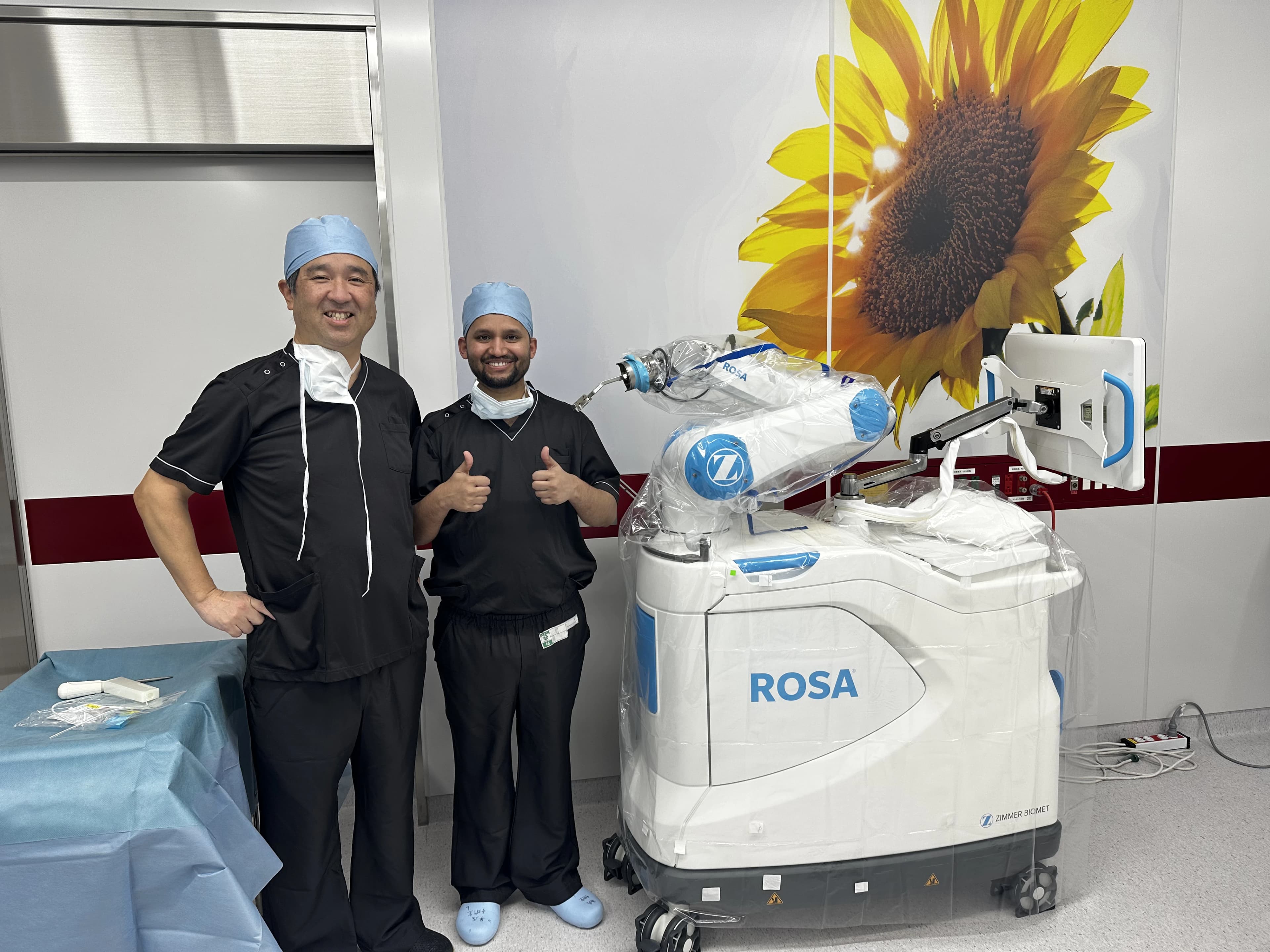
Intraoperative kinematics & 3D navigation alongside Japanese surgical faculty.
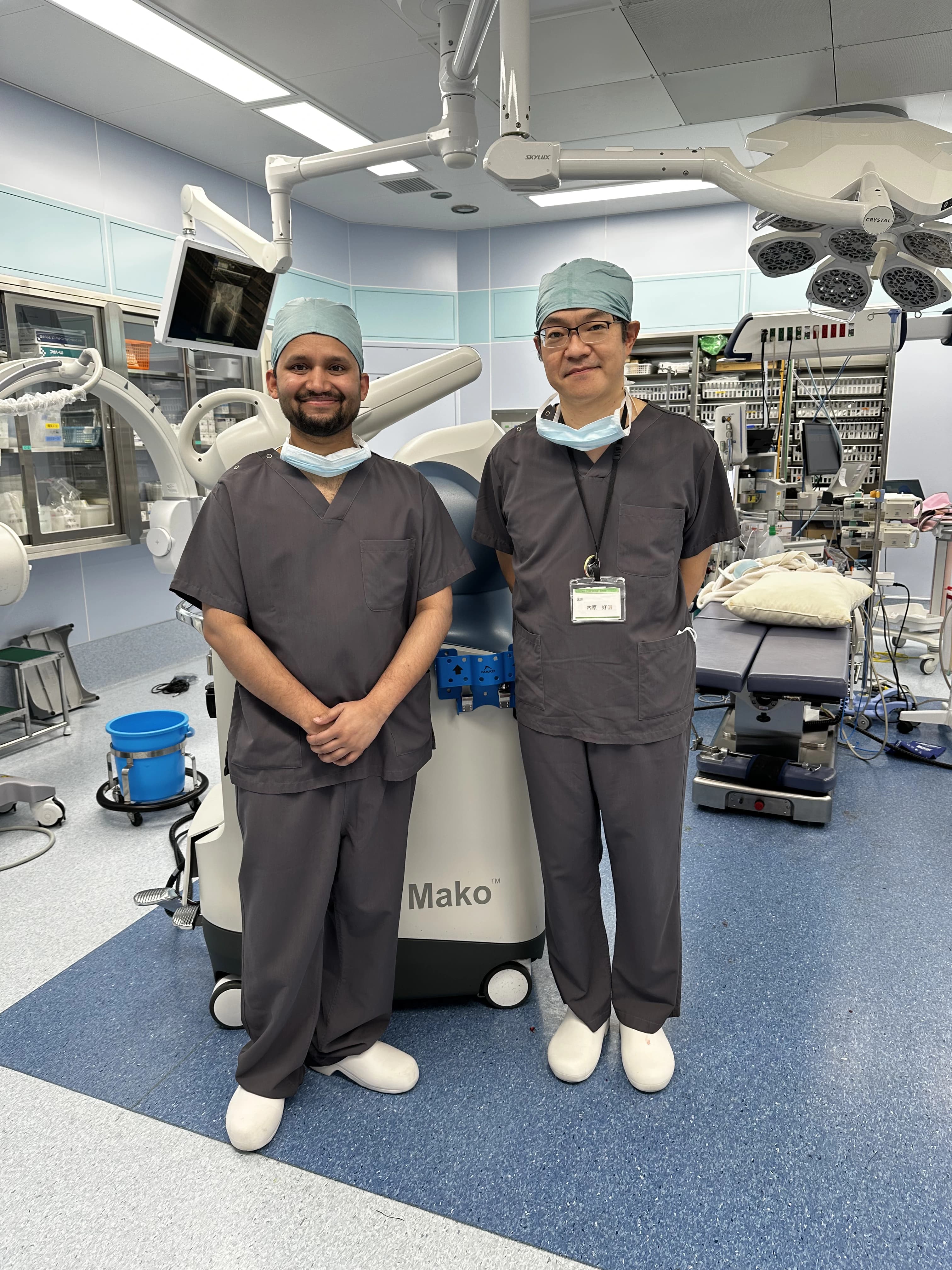
International fellowship-level precision applied to patient care in Patna.
Frequently Asked Questions on Rotator Cuff & Shoulder Repair
Untreated rotator cuff tears tend to enlarge over time as the muscle retracts and undergoes fatty degeneration. Chronic massive tears can lead to 'rotator cuff tear arthropathy'—a severe form of shoulder arthritis that may eventually require reverse shoulder replacement.